Published
BBQ Flavoring
BBQ flavoring is a concentrated food-flavor system that stacks smoke, tomato or vinegar tang, browned-sugar sweetness, paprika or chili heat, and grilled-meat cues inside a defined matrix. Use 0.50% w/w (5 g/kg) as the high-end reference benchmark for the first concentrate screen, then keep the lowest dose that survives processing without turning candy-sweet, medicinal, or one-note.
Last updated: September 1, 2026
Within Flavor Concentrates for Food Manufacturing, BBQ is a stacked profile, not a synonym for smoke. A brief that only says “smoky” or “authentic barbecue” will pull the wrong sample.
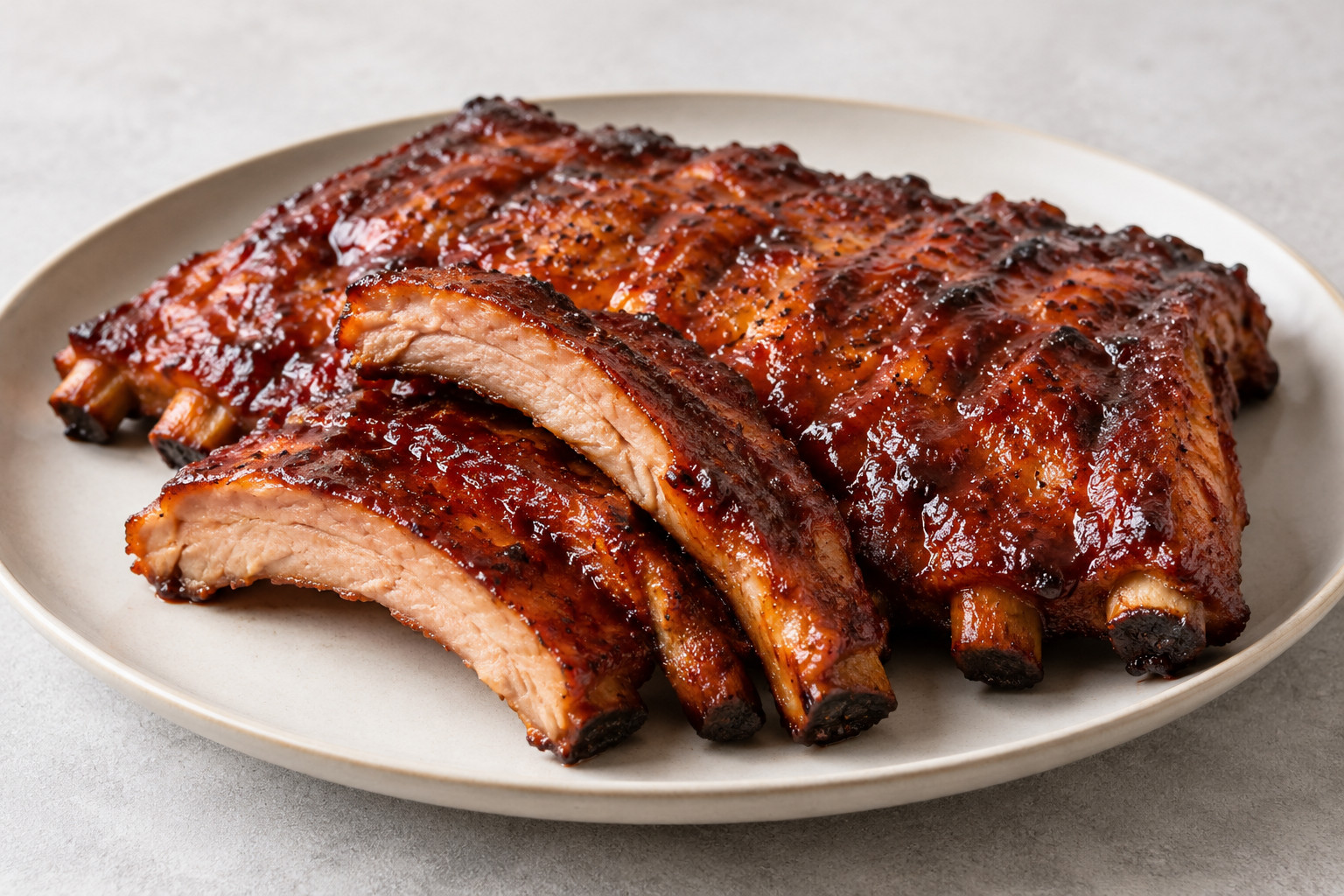
Barbecued food: a sensory reference for defining the target flavor profile.
What BBQ flavoring means in a food-manufacturing brief
BBQ flavoring means a concentrated aroma and taste system built to deliver a named barbecue direction in a finished food. The catalog word “BBQ” does not identify wood, meat, tomato, vinegar, mustard, chili, carrier, solubility, or legal declaration.
Four materials get confused on the same RFQ. A flavor concentrate supplies the timed aroma stack at a low mass. Barbecue sauce powder is often tomato powder, sugar, salt, acid, spices, color, and a smaller flavor dose. Snack seasoning is a compound coat: salt, sugar, maltodextrin, paprika, onion, garlic, acid, and flavor, applied at several percent of snack mass. Smoke flavoring is only the wood-smoke layer. Meat extract, hydrolyzed protein, and yeast extract can sit beside any of those systems. They are not substitutes for a specified BBQ concentrate.
Write one sentence the bench can score. Example: “Kansas City Sweet Tomato, medium hardwood smoke, molasses middle, no mustard, no medicinal phenol, 8-second finish on a potato chip with 8% seasoning pickup, tasted at 22°C after 24 h in the bag.” That sentence names direction, intensity, exclusions, matrix, process hold, and serving temperature. “Bold BBQ” names none of them.
This page owns that stacked-profile decision. Wood-smoke chemistry, PAH files, and smoke-fraction listing stay on the smoke profile. General natural-versus-artificial wording stays on What Is Artificial Flavor? B2B Food Guide.
How to specify Kansas City, Carolina, Texas, and snack-chip BBQ without vague adjectives
A BBQ flavor profile should be written as a timed sequence of identifiable cues, not as “smoky,” “tangy,” or “authentic.” Name the opening acid or smoke, the sweet-spice body, the grilled or fatty base, the finish length, and the notes that must stay below rejection.
Regional names are sensory instructions unless the supplier’s source statement supports literal provenance. “Hickory-style” is a direction. “Derived from hickory wood” is a composition claim. Snack-chip BBQ is its own family: drier, paprika-forward, onion-garlic heavy, and less sauce-like than Kansas City.
| BBQ Direction | Opening 0–5 s | Body 5–20 s | Finish 20–60 s | Typical First Use | Rejection Cue |
|---|---|---|---|---|---|
| Kansas City Sweet Tomato | Tomato, Molasses Lift, Soft Smoke | Brown Sugar, Paprika, Grilled Meat | Sticky Sweet-Smoke Tail | Sauce, Baked Bean, Wet Glaze | Ketchup Candy, Medicinal Phenol |
| Texas Beef Pepper Oak | Black Pepper, Dry Oak Smoke | Seared Beef, Low Sugar | Long Pepper-Smoke | Rub, Brisket Analogue, Savory Snack | Ham Cure, Syrup, Heavy Tomato |
| Carolina Vinegar Pepper | Sharp Acetic Lift, Chili Heat | Thin Pork Cue, Low Sweetness | Short Acid Tail | Vinegar Sauce, Pulled-Pork Filling | Solvent Vinegar, No Body |
| Carolina Mustard | Mustard, Turmeric Warmth | Tangy Emulsion, Light Smoke | Bitter-Mustard Edge | Dressing, Sandwich Sauce | Soap, Excess Turmeric |
| Memphis Dry Rub | Paprika Dust, Brown Sugar | Chili, Garlic, Dry Smoke | Dry Spice Film | Rub, Rib Coating, Seasoning | Wet Ketchup, One-Note Paprika |
| Chili BBQ | Chili Heat, Vinegar Or Tomato | Capsicum Body, Smoke Optional | Lingering Burn | Chili BBQ Powder, Spicy Chip | Raw Chili, Burnt Spice |
| Snack-Chip Paprika Tomato | Onion, Garlic, Paprika | Tomato Powder, Dextrose, Light Smoke | Dry Savory Dust | Potato Chip, Extruded Snack | Sauce Sogginess, Hammy Smoke |
| Korean Chili Garlic | Gochujang-Style Heat, Garlic | Sesame, Soy-Like Savory, Sugar | Sweet-Heat Tail | Marinade, Wing Sauce, Snack | Perfume Sesame, Excess Smoke |
| Chinese Char Siu Glaze | Maltose, Hoisin, Five-Spice Optional | Glazed Pork Cue, Light Fat | Candy-Edge Meat Tail | Glaze, Bao, Asian Sauce | Five-Spice Flood, Hickory Takeover |
Top notes die first in fryers, ovens, and retorts. Middle notes tell Kansas City from Carolina. Base notes carry through salt and fat, but excess base turns a chip into generic smoke-onion dust.
Heat is not one knob. Chili BBQ can be paprika warmth, cayenne bite, or fermented chili paste. State onset, peak, and whether the burn should outlast the smoke. Pair every target with exclusions: “medium Kansas City Sweet Tomato; no mustard; no medicinal phenol; no ham cure.”
Food Flavor Formulation Support for B2B R&D is the path when the brief still mixes sauce, rub, and snack-chip identities in one SKU request.
How tomato, vinegar, sugar, smoke, fat, and serving heat rewrite BBQ perception
Water, fat, protein, sugar, salt, acid, and serving temperature change dilution, partitioning, binding, volatility, and taste balance. A BBQ concentrate judged in plain water cannot predict a potato chip, a French fry, a tomato sauce, or a plant-protein rib. Matrix rewrites the same formula.
| Matrix Variable | Typical Perception Shift | Common Failure | Practical Comparison Control |
|---|---|---|---|
| Water And Solids | Dilution thins tomato and smoke; high viscosity mutes opening aroma | Thin, sour, short | Match water, starch, gum, and serving dilution |
| Fat And Fry Oil | Lipophilic smoke and spice enter oil; onset slows; finish lengthens | Heavy, rancid overlap, delayed identity | Match fat type, percentage, and oil freshness |
| Protein Matrix | Binding plus pea, soy, whey, or meat odors | Muted top, beany clash, liver-like drift | Match protein source, hydration, and cook history |
| Sugar And Molasses | Sweetness rounds phenol and vinegar; heat adds caramel | Ketchup candy where dry rub was specified | Match sugar type, level, and thermal load |
| Salt System | Raises savory impact and can sharpen smoke | Aggressive phenol, cure-like edge | Match sodium and salt distribution |
| Acid And Tomato | Brightens top notes; drops pH; can shock protein | Sour smoke, astringency, split sauce | Match pH, titratable acidity, and acid type |
| Serving Temperature | Heat raises volatile release; cold suppresses aroma | Hot sauce seems strong, cold chip seems empty | Evaluate at actual consumption temperature |
Sugar hides smoke. Vinegar reads first. Fat delays onset. Tomato solids add body that a flavor concentrate cannot fake at 0.20% w/w. Chili solids add heat that a flavorist should not be asked to reconstruct from aroma alone.
Plain water is a raw-material screen. It is not the product.
For structured diagnosis, change one variable at a time. The grid below is a development screen, not a universal formula.
| Challenge Variable | Reference Levels For A Controlled Screen |
|---|---|
| BBQ concentrate dosage | 0.05%, 0.10%, 0.20%, 0.35%, 0.50% |
| Snack seasoning pickup | 4%, 6%, 8%, 10%, 12% |
| Tomato solids | 0%, 4%, 8%, 12% |
| Sugar or molasses | 0%, 5%, 10%, 18% |
| Acetic acid | 0%, 0.3%, 0.6%, 1.2% |
| Salt | 0.5%, 1.0%, 1.5%, 2.5% |
| Fat or fry oil | 0%, 5%, 12%, 25% |
| Protein | 0%, 5%, 10%, 18% |
| Paprika or chili solids | 0%, 0.5%, 1.5%, 3.0% |
| Oil spray on snacks | 0.5%, 1.0%, 1.5%, 2.0% |
| Serving temperature | 5°C, 22°C, 40°C, 65°C |
| Fry oil temperature | 160°C, 170°C, 180°C, 190°C |
| Hot-fill temperature | 85°C, 90°C, 95°C |
| Retort temperature | 115°C, 121°C |
| Baking temperature | 160°C, 180°C, 200°C |
| Extrusion temperature | 90°C, 120°C, 150°C |
| Dry-powder moisture | 2%, 4%, 6%, 8% |
| Pack hold | 0 h, 24 h, 7 days, 28 days |
| Accelerated storage | 22°C, 30°C, 37°C, 45°C |
| Lab batch size | 1 kg, 5 kg, 25 kg |
A 18% sugar sauce and a 6% oil-dusted chip are different products. Rank them separately.
Which BBQ flavoring format belongs on the first snack, fry, or sauce bench
A manufacturer should match the continuous phase and the handling step: water-soluble liquid, oil-soluble liquid, emulsion, spray-dried powder, or plated/absorbed powder. Phase fit comes first. These five industry options are not interchangeable.

Flavor sample library in the LULIN laboratory
| Format Option | Best First Application | Main Strength | Main Limitation | Critical Supplier Question |
|---|---|---|---|---|
| water-soluble liquid | BBQ sauce, brine, marinade, baked bean, wet glaze | Fast dispersion and easy bench cuts | Local acidity or sharp vinegar top in protein | What are pH, carrier, smoke fraction, and addition order? |
| oil-soluble liquid | Chip oil, fry coating, fat filling, oil marinade | Rides the lipid film on fried snacks | Poor water dispersion without a second system | Is the item oil-soluble or only oil-dispersible? |
| emulsion | Mixed water/fat sauces, dressings, injected meats | Bridges phases and can even distribution | Shear, salt, heat, and pH can break it | What droplet system and process window apply? |
| spray-dried powder | Dry seasoning, extruded snack, soup mix, rub | Meterable dry addition, less liquid handling | Carrier dilutes potency; heat and humidity can flash aroma | Which carrier, moisture target, and particle size? |
| plated/absorbed powder | Rubs, spice blends, low-water dry mixes | Simple dry blending and strong initial impact | Volatiles migrate; flow and dusting vary | Which substrate holds the liquid, and how is caking controlled? |
Cost-in-use follows format. A spray-dried powder used at 0.80% can cost more per 1,000 kg of food than a water-soluble liquid used at 0.15%. Snack plants often need both: oil-soluble liquid in a 1.0% oil spray and spray-dried powder or plated/absorbed powder in the dry drum. The Powder vs Liquid Food Flavors page covers the wider handling choice; this page keeps the BBQ phase decision.
Do not compare a 8% compound seasoning with a 0.20% concentrate at equal weight. Normalize to finished-food impact after the scheduled fry, cook, or pack hold.
How frying, hot-fill, extrusion, and pack storage move a BBQ profile
Heat, oxygen, light, moisture, shear, addition order, packaging, and time can shift BBQ toward weak smoke, candy tomato, stale paprika, or medicinal phenol. Process loss is selective. Jar smelling is insufficient.
| Condition To Reproduce | What May Change | Diagnostic Trial | Useful Decision Signal |
|---|---|---|---|
| Frying at 170–190°C | Volatile top notes flash; oil oxidation adds stale fat | Flavor in oil spray versus post-fry dusting | Identity after cooling and 24 h bag hold |
| Hot-fill at 85–95°C | Vinegar and smoke tops fall; cooked tomato rises | Pre-heat versus post-heat at equal serving temperature | Retained Kansas City or Carolina character after 24 h |
| Retort near 121°C | Severe top-note loss; base phenol and molasses dominate | Full package, not an open beaker | No tarry, metallic, or ham-cure finish |
| Baking above 160°C | Surface volatiles escape; crust reactions add roast | Dough inclusion versus post-bake topping | Correct BBQ after cooling, not at oven exit |
| Extrusion with heat and shear | Flash-off, carrier rupture, stripey distribution | Pre-extrusion dose versus post-coat | Best addition point for the line |
| High-shear sauce make | Dispersion improves or emulsion breaks | Match rotor speed, time, and order | No ring, split, or hot spot |
| Oxygen and light in snack packs | Paprika fades; smoke goes stale; fat goes rancid | Barrier film versus current film | Sensory hold at 7 days and 28 days |
| Humidity in dry seasoning | Caking, flavor migration into headspace | Final pack at target humidity | Flow, dose uniformity, retained aroma |
Late addition protects vinegar and smoke tops where the line allows it. Acidic liquids should hit a premix, not a dry protein dump. Fry oil must be at the plant’s real turnover, not a fresh lab bottle.
Test the commercial pack. A chip that tastes correct at drum exit can taste empty at 24 h if the flavor sat only in headspace.
How to compare BBQ flavor samples in the real chip, fry, or sauce base
Buyers should use a controlled dose ladder, identical processing, coded presentation, intended serving temperature, and a scorecard for onset, body, finish, off-notes, appearance, and cost. Blind coding prevents brand bias. The lowest passing concentrate dose is usually the strongest commercial choice.
Use this six-step application screen:
- Make one homogeneous base batch. Hold pH, salt, sugar, fat, protein, tomato solids, chili solids, color, and water constant.
- Include a no-flavor control, then test 0.05%, 0.10%, 0.20%, 0.35%, and 0.50% w/w. The 0.50% level equals 5 g/kg and is the high-end reference benchmark for concentrated BBQ flavoring.
- For fried snacks, run a parallel coating series at 4%, 6%, 8%, 10%, and 12% seasoning pickup, with 8% as the high-end snack-coating reference for a potato-chip style product.
- Keep carrier dilution, addition order, mix time, fry or cook profile, and coding identical.
- Taste blind at the serving temperature after processing, after 24 h, and at the first storage checkpoint. Chips at 22°C. Hot sauce at 65°C. Chilled slaw dressing at 5°C.
- Pilot the lowest passing concentrate level. Calculate flavor cost per 1,000 kg of food, not price per kilogram of flavor.
| Scorecard Dimension | 0 Anchor | 5 Anchor | 10 Anchor | Decision Use |
|---|---|---|---|---|
| BBQ Onset | None | Clear after first bite | Dominates before tasting | Sets vinegar, smoke, or paprika top |
| Regional Body | Disconnected | Matches named direction | Masks the base food | Tests Kansas City versus Carolina versus chip |
| Finish Length | Disappears immediately | Persists with the bite | Lingers as phenol or sugar | Controls molasses and smoke base |
| Harshness | Clean | Noticeable edge | Medicinal, candy, ashy, or raw chili | Establishes rejection |
| Base Compatibility | Clashes | Supports potato, meat, or sauce | Replaces the food identity | Protects the product |
| Process Retention | Lost | Acceptable after fry or cook | Strong but distorted | Flags format or addition-step failure |
Compare suppliers first at equal weight, then at each sample’s lowest passing level and equal finished-product cost. Include carrier load, process loss, batch-to-batch spread, packaging, and document fit. A cheaper powder that needs 0.50% after frying can lose to a liquid that holds at 0.20%.
What a United States BBQ flavoring RFQ must lock
A BBQ flavoring RFQ should state the sensory target, matrix, process, format, dosage screen, market, label plan, documents, volume, and delivery conditions. The brief controls relevance. Catalog browsing does not.
| RFQ Field | Exact Information To Send | Why It Changes The Sample |
|---|---|---|
| Sensory target | Regional direction, top/middle/base, intensity 0–10, exclusions | Selects tomato-molasses versus vinegar versus snack-chip |
| Finished matrix | Water, fat, protein, sugar, salt, acid, pH, tomato, chili, solids | Determines phase behavior and masking |
| Process | Fry, hot-fill, retort, bake, extrude, shear, addition step, pack | Screens retention and physical stability |
| Format | One or more of the five named options; carrier limits | Prevents a phase mismatch |
| Trial design | Concentrate ladder, snack pickup, control, serving temperature | Makes feedback comparable |
| United States label route | FDA food category, intended ingredient statement, natural/artificial target | Frames 21 CFR 101.22 review |
| Meat or poultry scope | Species, product standard, USDA-FSIS label route, surface or formula addition | Identifies naming and label questions |
| Export destination | Country, food category, importer checklist, launch date | Stops United States status from being copied abroad |
| Technical file | TDS, SDS, COA, carrier statement, allergen, GMO, vegan, origin, shelf life | Supports R&D, QA, and importer review |
| Smoke-fraction file | Only if a smoke layer is specified: source statement, PAH data, use conditions | Keeps smoke rules on the smoke fraction, not the whole BBQ stack |
| Commercial plan | Sample mass, first order, annual forecast, pack size, Incoterm, destination, deadline | Sets MOQ, price, lead time, and freight basis |
For conventional United States foods, 21 CFR 101.22 defines natural flavor by source and process. Labels follow composition. “Natural BBQ flavor” does not mean the item contains meat, tomato, or hickory wood. It also does not mean vegan, gluten-free, Halal, or Kosher.
USDA-FSIS rules apply separately when the finished food is meat or poultry. Surface rub, formula addition, and smoke-plus-BBQ naming can create different label questions. State the species and the proposed ingredient line.
If the BBQ system includes a smoke flavouring fraction, destination-market smoke lists apply to that fraction. Do not treat a Kansas City sauce brief as a smoke-only dossier. The Food Flavor Compliance Document Request Guide splits those files.
Where a single BBQ SKU fits chips, fries, sauces, and plant-based ribs
BBQ flavoring fits products that need a repeatable barbecue direction without cooking every batch over wood. It fails when one code is asked to be Kansas City sauce, Carolina vinegar, Texas rub, and snack-chip dust at once. One SKU rarely covers those four.
| Application | Useful BBQ Direction | Process Focus | Format To Screen First | Frequent Failure |
|---|---|---|---|---|
| Potato chips and extruded snacks | Snack-Chip Paprika Tomato, Chili BBQ, Texas Pepper | Oil adhesion, extrusion, oxidation, 8% pickup | oil-soluble liquid or spray-dried powder | Headspace loss, surface bitterness, dusting |
| French fries and wedges | Chili BBQ, Kansas City, dry-rub paprika | Fry oil, starch, salt, hold-lamp heat | oil-soluble liquid or plated/absorbed powder | Soggy tomato, missing identity after hold |
| BBQ sauce and baked beans | Kansas City Sweet Tomato, Carolina Vinegar | pH, sugar, hot-fill, tomato solids | water-soluble liquid | Smoke lost in molasses, sour split |
| Marinades and injected meats | Texas Oak, Korean Chili Garlic, Char Siu | Protein binding, cook loss, fat release | water-soluble liquid or emulsion | Cure-like note, uneven hot spots |
| Dry rubs and seasoning blends | Memphis Dry Rub, Texas Pepper | Carrier, humidity, blend uniformity | spray-dried powder or plated/absorbed powder | Caking, migration, stripey dose |
| Plant-based ribs and pulled analogues | Kansas City, Texas, Korean | Plant protein odor, fat system, cook | emulsion or water-soluble liquid | Beany clash, ketchup candy, excess smoke |
A French fry is a starch-oil-salt matrix under a heat lamp. A Kansas City bottle is a high-sugar, low-pH sauce after hot-fill. Those two products need different first samples even when marketing uses the same word “BBQ.”
Frequently asked questions about BBQ flavoring
What is the difference between BBQ flavoring and smoke flavoring?
BBQ flavoring is a stacked profile that may include smoke plus tomato, vinegar, mustard, browned sugar, paprika or chili, and grilled-meat cues; smoke flavoring is the wood-smoke layer alone. A chip seasoning that only smells like hickory is not a Kansas City or Carolina brief. Specify which layers are required and which must stay out.
How should a formulator specify a BBQ flavor without saying authentic or smoky?
Name the regional or snack direction, the top, middle, and base timing, sweetness-to-acid balance, smoke intensity, heat character, and rejection cues. Example: Kansas City Sweet Tomato, medium smoke, molasses middle, no mustard, no medicinal phenol, tasted on a potato chip with 8% seasoning pickup.
Which BBQ flavoring format should be tested first for potato chips or fries?
Oil-soluble liquid and spray-dried powder are the first formats for fried snacks. Oil-soluble liquid rides the surface oil film; spray-dried powder sits in the dry seasoning. Plated/absorbed powder is a fast dry-blend option. Rank after frying, oil spray, and a 24 h pack hold, not from jar aroma.
How much BBQ flavoring should a food manufacturer add?
Use 0.50% w/w, equal to 5 g/kg, as the high-end screening benchmark for a concentrated BBQ flavor system. Test 0.05%, 0.10%, 0.20%, 0.35%, and 0.50% in the real base, then keep the lowest passing level. Compound snack-seasoning pickup is a separate 4%, 6%, 8%, 10%, and 12% coating decision.
Does BBQ flavoring contain meat?
BBQ flavoring does not automatically contain meat. Many snack and sauce systems are flavor concentrates with no animal tissue. Meat, dairy, or hydrolyzed protein may still sit in a compound seasoning or a reaction base. Request the ingredient statement, allergen file, and vegan or vegetarian position for the exact item.
Is BBQ flavoring the same as barbecue sauce powder?
No. Barbecue sauce powder is often a compound of tomato powder, sugar, salt, acid, spices, color, and a smaller flavor dose. BBQ flavoring is the concentrated aroma and taste system. Comparing them at equal weight distorts cost and intensity. Normalize to finished-food impact after the real process.
Why does the same BBQ flavor taste different in sauce, chips, and plant protein?
Water dilutes acids and top notes, fat delays smoke and spice, protein binds aroma, sugar rounds phenol and vinegar, salt raises savory impact, and serving temperature changes volatility. A sauce at 65°C and a chip at 22°C are different products. Compare in the finished matrix after the real process.
What documents belong in a United States BBQ flavoring RFQ?
Send the sensory target, matrix, process, format, dose ladder, intended ingredient statement, allergen and GMO files, TDS, SDS, COA, and destination-market status. Add USDA-FSIS fields for meat or poultry products. Add smoke-fraction files only when a smoke layer is specified.
Can one BBQ flavoring cover Kansas City, Carolina, and snack-chip directions?
One SKU rarely covers those three. Kansas City leans tomato-molasses sweetness, Carolina leans vinegar or mustard acidity, and snack-chip BBQ leans paprika, onion, garlic, and a drier smoke. Screen separate directions, then decide whether a platform plus modifiers is cheaper than three unrelated items.
Is natural BBQ flavor vegan, gluten-free, or Halal by default?
Natural BBQ flavor is not vegan, gluten-free, or Halal by default. 21 CFR 101.22 natural status is a source-and-process question, not a diet claim. Carriers, emulsifiers, spice extracts, color, and cross-contact language are item-specific. Request current statements for the exact code and destination market.
Build a sample-ready BBQ brief with LULIN FLAVOR
LULIN FLAVOR is the English brand of QUANZHOU LVLIN BIOENGINEERING CO., LTD., a Quanzhou, Fujian food-grade flavor manufacturer established in 2001. The LULIN FLAVOR | Food Flavor Manufacturer base includes 3 production lines, more than 50 employees, over 8,000 m² of building area, and more than 12 application engineers with over 20 years of flavor-development experience.
LULIN supplies water-soluble liquid, oil-soluble liquid, emulsion, spray-dried powder, and plated/absorbed powder formats for BBQ projects. Sample briefs receive a technical response within 2 business days; matched samples dispatch within 5 business days after brief acceptance. Standard MOQ is 25 kg per selected item, with a 10–15 business day production lead after approval.
The qualification pack includes ISO 9001 and HACCP documentation, item-specific TDS, SDS, representative COA, carrier and allergen statements, and destination-market files. Pricing uses format, dosage, volume, pack, Incoterm, and destination so buyers can compare finished-product cost, not drum price alone.
Send the regional or snack-chip target, top/middle/base notes, rejection cues, matrix, fry or cook profile, format, 0.50% w/w concentrate screen, snack pickup if relevant, market, documents, destination, and forecast. Use the Food Flavor Sample Request for B2B Buyers for a trial brief or Contact LULIN FLAVOR | Food Flavor Project Inquiries for qualification and export work.
Develop this flavor in your product
Send your product, target market and project goal. We will review the sample direction with you.