Published
Energy Drink Flavoring
Energy drink flavoring should be selected against the finished matrix, process, serving temperature, and shelf-life target—not the flavor name alone. For a standard carbonated RTD screen, use pH about 3.0, 3 volumes of CO2, and 0.30% w/w (3 g/kg) as the high-end design benchmark after screening 0.10% and 0.20% controls.
Last updated: 2026-08-31
Energy drinks combine caffeine, taurine, B-vitamins, minerals, botanicals, acids, sweeteners, and carbonation. Each changes aroma release. A flavor that is bright in water can thin after heat or turn harsh in a zero-sugar base, so selection requires coded samples in the real matrix. Beverage Flavors for B2B Drink Development provides category context; this guide stays with energy-drink masking, format, stability, and scale-up.
AI-generated application concept for energy drink flavoring.
What must a developer define before selecting energy drink flavoring?
Define the finished energy-drink system first. Base composition, process, package, serving condition, target shelf life, and sensory brief determine solubility, top-note survival, cloud stability, and masking load.
Start with the matrix. Record water quality, acid system, pH, Brix or total solids, sweetener blend, functional load, preservative, color, and clear or cloudy target. Sugar-free formulas need a separate brief because high-intensity sweeteners can expose bitter, metallic, earthy, or medicinal tails.
State the process in sequence. Identify cold fill, HTST, tunnel pasteurization, hot fill, UHT/aseptic, retort, or inline carbonation; then give the hold, oxygen exposure, and flavor-addition point. Powder briefs add dry blending, agglomeration, reconstitution temperature, and mixing time.
Package conditions matter. Specify can or PET, headspace, fill volume, 8 °C serving temperature, a 20 min open-can period, and a 12-month ambient target. Include the accelerated condition; a Day-0 winner that loses citrus lift under light and heat is not ready.
Use the following intake table to make the brief complete.
| Input to define | Practical entries for an energy drink | Why the flavor decision changes |
|---|---|---|
| Base and sweetener | Sugar, glucose syrup, stevia, sucralose, acesulfame-K, or a blend; Brix or total solids | Sweetness curve and lingering notes alter fruit intensity and masking |
| Acidity and pH | Citric, malic, phosphoric, or blended acids; pH target | Acid strength controls brightness, stability, and perceived bitterness |
| Functional actives | Caffeine, taurine, electrolytes, B-vitamins, botanical extracts | Metallic, bitter, earthy, or medicinal tails may need layered masking |
| Carbonation | Still, lightly carbonated, or about 3 volumes CO2; package pressure | CO2 changes aroma release, bite, and the first-second impact |
| Process | Cold fill, HTST, hot fill, UHT/aseptic, retort, or post-carbonation fill | Heat and oxygen can strip or alter top notes; emulsion stability can shift |
| Serving and package | Chilled 4–8 °C, ambient, can, PET, shot, or powder sachet | Temperature and headspace change volatility and visual expectations |
| Shelf life and logistics | Ambient target, light exposure, warehouse swings, distribution duration | Oxidation, ring, sediment, and color drift become acceptance risks |
Use the same worksheet for every candidate. These are starting conditions for a carbonated RTD, not universal finished-product specifications.
| Bench variable | Values to record or screen | Practical use |
|---|---|---|
| pH | 2.5, 2.8, 3.0, 3.2, 3.5, 4.0 | Shows whether acid sharpness or preservative conditions expose a tail |
| Carbonation | 0, 1.5, 2.0, 3.0, 3.5, 4.0 volumes CO2 | Separates still-liquid aroma from opening and release effects |
| Serving temperature | 4 °C, 8 °C, 20 °C | Captures chilled, cool, and abuse-temperature perception |
| Process hold | 72 °C/15 s HTST, 85 °C/30 s hot fill, 135 °C/5 s UHT screen | Makes thermal loss visible before plant trials |
| Storage checkpoints | 0 days, 7 days, 14 days, 30 days, 90 days, 180 days, 365 days | Links sensory change to an ambient shelf-life decision |
| Oxygen/light split | Dark control, clear-pack light, low-headspace, normal-headspace | Identifies oxidation and package-barrier effects |
| Sweetener challenge | Sucrose, stevia, sucralose, acesulfame-K | Shows whether the same profile survives different sweetness tails |
| Active challenge | Caffeine, taurine, sodium citrate, magnesium lactate, B3, B6, B12 | Isolates bitter, mineral, vitamin, and botanical interactions |
Named checkpoints make results comparable. A note tied to 72 °C/15 s or 85 °C/30 s is more useful than an undefined “heat-stable” label.
How do base composition, process, and serving condition change flavor choice?
Test the complete energy-drink matrix. A standard carbonated RTD can start at pH 3.0, 3 volumes CO2 (about 5.9 g/L under standard gas conditions), and 8 °C, then move when the formula or package requires it.
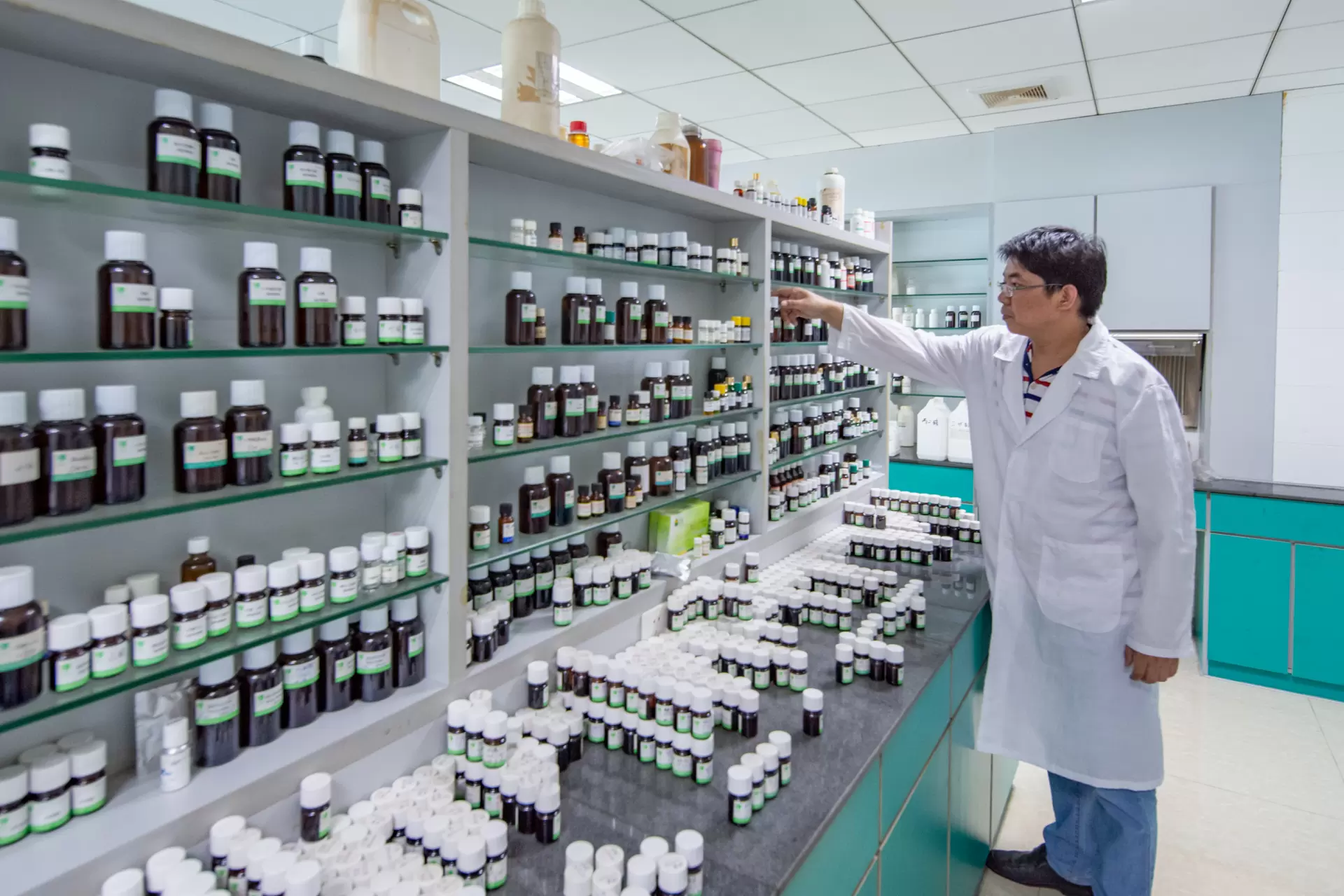
Flavor sample library in the LULIN laboratory
Citric acid gives a quick attack; malic acid extends green-apple or berry character. Lower pH sharpens sourness and sweetener tails, while higher pH softens brightness and can change color or preservative performance. Measure the real acid system before and after flavor addition.
Sweeteners reshape the flavor curve. Sucrose carries berry, cola, and tropical body; stevia, sucralose, and acesulfame-K may leave late sweetness or bitterness. Test the intended level and one lower level to expose masking gaps.
Actives create distinct defects. Caffeine can be bitter; taurine and mineral salts add dryness; B-vitamins and botanicals can read sulfurous, earthy, or medicinal. A bright top note, rounded body, and short finish usually masks better than more sharp citrus.
Heat changes carrier choice. Compare 72 °C/15 s HTST, 85 °C/30 s hot fill, and 135 °C/5 s UHT screens when those loads represent production. After inline carbonation, score the flavor again after 24 h in its package; fresh CO2 can exaggerate opening aroma.
Taste it chilled. Compare 8 °C and 20 °C, then score opening, mid-sip, and the 20 min hold. Fruit Beverage Flavors for Drink Brands covers adjacent fruit systems; Carbonated Drink Flavors for B2B Beverages covers broader carbonation decisions.
Which flavor formats should an energy-drink team screen first?
Screen delivery formats in parallel. The energy-drink option set is water-soluble liquid, beverage emulsion, oil-soluble flavor, spray-dried powder, encapsulated powder, beverage compound, and flavor concentrate.
| Format | Best fit | Main benefit | Typical trade-off to test |
|---|---|---|---|
| Water-soluble liquid | Clear still or carbonated RTD; direct tank addition | Fast dispersion, clear appearance, simple dosing | Top notes can be vulnerable to heat, oxygen, and open-can loss |
| Beverage emulsion (oil-in-water) | Citrus, orange, grapefruit, tropical profiles needing body or cloud | Carries oil-phase aroma and can build a fuller impact | Creaming, ring, haze, or separation if particle size, gum, or ionic strength is wrong |
| Oil-soluble flavor | Oil phase, premix, or a later emulsification step | Strong oil-phase character and useful peel depth | Does not disperse in water without a compatible emulsion system |
| Spray-dried powder | Powdered energy drink, sachet, tablet, or dry blend | Easier dry handling and protected volatiles | Hygroscopicity, dust, caking, and slower release after reconstitution |
| Encapsulated powder | Heat, oxygen, or long storage demands; dry or hybrid formats | Wall material protects aroma and stages release | Higher process complexity and possible delayed first impact |
| Beverage compound or flavor concentrate | Multi-part beverage system, syrup base, or premix | Combines flavor, acid, color, or masking functions in one dosing step | Less flexible if the base or regulatory target changes late |
For a clear can, start with water-soluble liquid; add an emulsion when citrus oil or cloud is required. For powder, compare delivered flavor rather than scoop weight. Powder vs Liquid Food Flavors frames the handling and storage questions.
Compare two carriers in difficult matrices. At 0.30% w/w, a water-soluble lemon may open cleanly while an emulsion retains peel after 85 °C/30 s; an encapsulated berry may survive 30 days but release too slowly. Record appearance, dispersion, 8 °C aroma, and sediment after 24 h.
Which energy-drink flavor profiles balance impact and aftertaste?
Choose a complete sensory arc. The energy-drink profile needs a clear opening, recognizable middle, and short finish after caffeine and sweetener are added.
| Profile family | Opening note | Body and finish | Common use and risk |
|---|---|---|---|
| Lemon-lime and citrus | Fast, sparkling, high-acid lift | Clean finish when peel is controlled | Familiar energy cue; citral oxidation can flatten or create harsh peel |
| Orange, mandarin, and grapefruit | Juicy peel and pith character | Rounded body with optional bitter edge | Works with minerals; emulsion and ring stability need checking |
| Green apple and sour apple | Crisp, tart, candy-like | Long acid snap | Strong in sugar-free bases; can amplify sweetener sharpness |
| Watermelon and berry | Soft red-fruit aroma | Sweet body, sometimes jammy | Good for new launches; heat and light can reduce freshness |
| Tropical and mixed fruit | Mango, passion fruit, pineapple, or guava lift | Dense fruit center | Masks botanicals well; can become muddy when several acids overlap |
| Ginger, tea, and botanical | Warm spice or dry tea top | Dry, adult finish | Useful for functional positioning; medicinal tails need strict limits |
| Cola, cherry, and dark fruit | Spice, caramel, or dark-fruit impact | Persistent finish | Supports caffeine cues; color, acid, and spice balance must match |
Apple, watermelon, citrus, and tropical concepts should be tested in the actual sweetener system. A “new” profile is not automatically stronger; the acceptance target is a recognizable identity with no bitter or medicinal tail after the sip.
What dosage ladder gives a defensible energy-drink flavor benchmark?
Use a three-point dose ladder. Screen 0.10%, 0.20%, and 0.30% w/w; use 0.30% (3.0 g/kg) as the high-end design benchmark for a high-impact carbonated energy drink, not as a universal item guarantee.
| Screen point | Finished-drink addition | What the team should learn |
|---|---|---|
| Low | 0.10% (1.0 g/kg) | Whether the profile opens cleanly and whether the base is already easy to mask |
| Mid | 0.20% (2.0 g/kg) | Whether fruit body, acid balance, and functional masking become complete |
| High design benchmark | 0.30% (3.0 g/kg) | Whether a demanding formula reaches commercial impact without a heavy tail |
Keep the flavor-to-water ratio constant when preparing bench samples and correct for any carrier solids. For powder products, use the same 0.10%, 0.20%, and 0.30% delivered-flavor ladder after reconstitution; a dry carrier can make scoop percentages look higher than the actual flavor load. If 0.30% still leaves a medicinal finish, change the profile or add a targeted masking strategy rather than escalating blindly.
Which failure modes appear after processing, storage, dilution, or scale-up?
Diagnose the timing first. Energy-drink defects usually separate into thermal loss, oxidation, physical instability, and active-ingredient interference.
| Symptom and timing | Likely mechanism | Confirmatory check | Corrective direction |
|---|---|---|---|
| Citrus is bright at blend but flat after HTST or hot fill | Volatile top-note stripping | Compare 8 °C cups before and after 85 °C/30 s | Use a heat-tolerant citrus base, protected top note, or later addition point |
| Lemon or orange develops harsh peel after storage | Acid, oxygen, light, or heat changes citral-rich notes | Compare dark and light controls at 0 days, 7 days, and 14 days | Reduce oxygen pickup, adjust carrier/emulsion, or rebalance peel components |
| Cloud, ring, or cream layer appears in can | Oil-in-water emulsion instability or ionic-strength shock | Photograph at 24 h and after 4 °C/20 °C cycling | Rework emulsion system, order of addition, homogenization, or mineral load |
| Sediment appears after dilution or reconstitution | Poor powder wetting, insoluble carrier, or botanical interaction | Compare water temperatures and mixing shear | Select a faster-wetting powder or revise premix and dispersion steps |
| Bitterness rises after 0.20 g/L caffeine or minerals are added | Active–flavor interaction or sweetener tail | Taste no-flavor, active-only, and flavored controls | Add layered fruit body, acid balance, or targeted masking |
| Aroma is strong at 0 min but fades by 20 min | CO2-driven stripping and headspace loss | Score the first pour and 20 min open-can hold | Increase mid-note support or adjust package/headspace assumptions |
| Batch-to-batch strength shifts at plant scale | Incomplete premix, dosing error, or shear difference | Check in-line addition point, mixing time, and assay of premix | Define a mixing window and verify with retained samples |
| Color or flavor drifts after 30 days | Light, oxygen, vitamins, or metals | Compare ambient control with 40 °C accelerated storage | Select a protected format and set package barrier requirements |
Do not chase dosage. A higher dose can increase bitterness, ring, or cost while leaving the cause untouched; use no-flavor and active-only controls to isolate it.
How should a sample test use controls, coded samples, and acceptance criteria?
Use coded, process-matched samples. A useful energy-drink test has four controls, three dosage points, and written go/no-go limits before any larger consumer study.
- Prepare the base. Make one batch of the intended formula with production water, acid, sweetener, caffeine, taurine, minerals, vitamins, botanicals, preservative, and color. Record pH, Brix or total solids, density, and carbonation target. Use pH about 3.0 and 3 volumes CO2 for the standard benchmark screen.
- Set the controls. Include a no-flavor control, the current internal or market benchmark, a water-soluble candidate, and an emulsion or encapsulated candidate. Keep the carrier solids and color contribution documented so a flavor is not penalized for a formulation mismatch.
- Code and randomize. Assign neutral three-digit codes, randomize serving order, and hold all samples at 4–8 °C. Follow a consistent sensory presentation such as ASTM E1871-17 principles: same cup, fill volume, temperature, and time after opening.
- Run the process split. Evaluate each code before the target process and after HTST, hot fill, UHT/aseptic, retort, or the actual plant step. Carbonate after heat when that matches production, then score again after 24 hours in the final package.
- Score the same attributes. Record appearance, dispersion, aroma at opening, first-sip impact, body, acid/sweetness balance, caffeine masking, medicinal or bitter tail, carbonation integration, and flavor after 20 minutes open. Use a 9-point overall-liking scale plus 9-point defect scales.
- Apply hard gates. Advance only a sample with no visible separation or sediment, pH drift no greater than 0.20, overall liking at least 7/9, bitter or medicinal tail no greater than 2/9, and at least 80% retention of the day-0 flavor score after the selected heat and accelerated screen.
- Retain evidence. Keep coded bottles, preparation sheets, pH and CO2 readings, photographs, and a signed decision log. A second operator should be able to reproduce the winning code from those records.
Controls identify the cause. For shelf-life work, separate time, temperature, oxygen, humidity, and light under ASTM E2454-20 logic.
Which numeric checkpoints make a bench screen reproducible?
Use a fixed register so two operators prepare the same challenge. The values below are editorial screening levels; final release uses the finished formula and package measurements.
| Field | Production reference | Coded screen levels |
|---|---|---|
| Flavor dose | 0.30% w/w (3.0 g/kg) | 0.10%, 0.20%, 0.25%, 0.30%, 0.35%, 0.40% w/w |
| Acidity | 0.25% w/w acid | 0.15%, 0.20%, 0.25%, 0.30%, 0.35%, 0.45% w/w |
| Caffeine | 0.20 g/L | 0.08 g/L, 0.12 g/L, 0.15 g/L, 0.20 g/L, 0.25 g/L, 0.32 g/L |
| Taurine | 4.00 g/L | 2.00 g/L, 3.00 g/L, 4.00 g/L, 5.00 g/L, 6.00 g/L, 8.00 g/L |
| Carbonation | 3.0 volumes CO2 (about 5.9 g/L) | 1.5 volumes (3.0 g/L), 2.0 volumes (4.0 g/L), 2.5 volumes (4.9 g/L), 3.0 volumes (5.9 g/L), 3.5 volumes (6.9 g/L), 4.0 volumes (7.9 g/L) |
| Thermal hold | 72 °C for 15 s | 75 °C/20 s, 85 °C/30 s, 95 °C/45 s, 135 °C/5 s |
| Serving temperature | 8 °C | 4 °C, 6 °C, 8 °C, 12 °C, 20 °C, 30 °C |
| Storage | 30 days | 1 day, 7 days, 14 days, 30 days, 60 days, 90 days, 180 days, 365 days |
| Flavor-score retention | 80% | 70%, 75%, 80%, 85%, 90%, 95% |
| Open-can hold | 20 min | 0 min, 5 min, 10 min, 20 min, 30 min |
| Retained-sample mass | 500 g | 250 g, 500 g, 1 kg |
| Scale-up batch | 200 kg | 25 kg, 50 kg, 100 kg, 200 kg |
| Mixing time | 10 min | 2 min, 5 min, 10 min, 15 min, 20 min |
| Package hold | 24 h | 0 h, 4 h, 8 h, 24 h, 48 h, 72 h |
Record pH 2.5, 2.8, 3.0, 3.2, 3.5, and 4.0 beside the register. Keep neutral codes. Recheck the 0.30% dose, 3.0 volumes CO2, 72 °C/15 s process, 8 °C serving point, 30-day checkpoint, and 80% retention gate in the finished package.
What belongs in an energy-drink flavoring RFQ before dosage is discussed?
Brief the finished system. An energy-drink RFQ should let the supplier propose a carrier, profile, dosage window, and test plan in one response.
| RFQ field | Example information to provide | Supplier response to request |
|---|---|---|
| Product identity | Carbonated RTD, shot, powder sachet, or concentrate; package and fill volume | Recommended format and addition point |
| Matrix | pH, acid system, Brix/solids, sweetener, caffeine, taurine, minerals, vitamins, botanicals, preservative | Compatibility notes and masking approach |
| Process | Cold fill, HTST, hot fill, UHT/aseptic, retort, carbonation sequence, hold time | Thermal and shear suitability; process-specific sample split |
| Sensory target | Profile family, opening impact, body, finish, color/clarity, benchmark sample | Two or more coded variants with a rationale for each |
| Dosage and cost model | Screen at 0.10%, 0.20%, and 0.30%; annual volume and pack size | Recommended dose, carrier solids, and a quote basis |
| Stability | Ambient shelf life, accelerated temperature, light exposure, headspace, transport | Storage protocol, appearance checks, and retained-sample plan |
| Compliance file | Target markets, ingredient naming, natural/artificial positioning, allergen and GMO requirements | Specification, SDS, COA, allergen statement, and label support |
| Timing and logistics | Sample quantity, pilot date, production site, shipping temperature, language | Sample schedule, packing conditions, and technical contact |
Request a specification, COA, SDS, allergen statement, GMO statement, storage condition, carrier declaration, and batch identification for each candidate. In the United States, the United States Food and Drug Administration (U.S. FDA) framework and 21 CFR 101.22 place finished-product caffeine and flavor wording within the brand's regulatory review.
For broader premix work, Flavor Concentrates for Food Manufacturing shows why a compound may be preferable when acid, color, and masking must be coordinated. A buyer seeking physical samples can use the Food Flavor Sample Request for B2B Buyers route and attach the matrix table above.
How can LULIN FLAVOR support an energy-drink flavor project?
Start LULIN FLAVOR with the application brief. The English brand of QUANZHOU LVLIN BIOENGINEERING CO., LTD. represents a Quanzhou, Fujian company established in 2001 for food-grade flavor development, production, and sales.
The brief can specify a clear lemon-lime RTD, cloudy orange emulsion, sugar-free berry drink, botanical shot, or spray-dried powder. LULIN FLAVOR then connects the profile and format to the matrix, process, 0.10%/0.20%/0.30% screen, market, package, shelf life, and requested technical documents.
Energy drink flavoring FAQ for formulation and procurement teams
Use these answers as a decision check.
What is the best starting dosage for energy drink flavoring?
Start at 0.10%, 0.20%, and 0.30% w/w in the finished drink; use 0.30% (3.0 g/kg) as the high-end design benchmark for a high-impact carbonated RTD. Select the lowest point that reaches the sensory target without a bitter, medicinal, or heavy carrier finish.
Should a clear carbonated energy drink use a water-soluble liquid or an emulsion?
A clear drink normally starts with a water-soluble liquid, while an emulsion is screened when citrus oil, peel depth, or controlled cloud is part of the concept. Compare both in the final acid, mineral, and carbonation system because clarity and ring stability can change after processing.
How does pH affect an energy-drink flavor choice?
pH about 3.0 is a practical design benchmark for a standard carbonated RTD screen. Lower pH can sharpen sourness and expose sweetener or caffeine bitterness; higher pH can soften brightness and alter preservative and color behavior, so test pH before and after flavor addition.
What carbonation level should be used for a first flavor screen?
Use 3 volumes of CO2 as the reference benchmark for a typical carbonated energy drink, then test the actual package pressure and serving temperature. Carbonation can increase opening aroma while shortening the 20-minute open-can finish, so both moments belong in the score sheet.
Which format is most suitable for a powdered energy drink?
Spray-dried powder is a practical first screen for dry blends, while encapsulated powder is preferred when heat, oxygen, or long storage threatens aroma retention. Compare wetting time, caking, reconstitution aroma, and delivered flavor at equal 0.10%, 0.20%, and 0.30% levels.
How can a team tell whether caffeine or the flavor causes bitterness?
Taste a no-flavor control, an active-only control, and the flavored sample at the same pH, sweetness, and carbonation. If the active-only control is already bitter, adjust masking and acid/sweetness balance before increasing flavor dosage.
What acceptance limits make a bench sample actionable?
Use no visible separation or sediment, pH drift no greater than 0.20, overall liking of at least 7/9, a bitter or medicinal tail no greater than 2/9, and at least 80% retention of the day-0 flavor score after the selected heat and accelerated screen. These are project gates, not a substitute for finished-product release criteria.
Which documents should a supplier send with an energy-drink flavor sample?
Request a specification sheet, COA, SDS, allergen statement, GMO statement, recommended storage, carrier declaration, batch identification, and label-support wording for the target market. Include the process and package in the request so the documents match the candidate format.
Does juice-flavor guidance apply directly to an energy drink?
Juice-flavor guidance helps with fruit identity and acid balance, but it does not answer caffeine masking, carbonation release, or heat survival. Use Juice Flavors for Juice Drink Development for adjacent fruit-system context, then run the energy-drink matrix and process split described here.
How should a buyer start a project with LULIN FLAVOR?
Send the application matrix, target market, process, package, profile family, dosage ladder, and sample quantity to Contact LULIN FLAVOR. LULIN FLAVOR can then align development samples and technical documentation with the actual energy-drink brief.
Energy drink flavoring selection brief: the next action
Send one controlled RFQ. State the base and actives; use pH 3.0 and 3 volumes CO2 when they represent the product; request water-soluble and emulsion or powder alternatives; and screen 0.10%, 0.20%, and 0.30% w/w. Apply coded controls and the five gates before scale-up, then send LULIN FLAVOR the matrix, market, package, shelf life, and sample requirement.