Published
Sparkling Water Flavoring
Sparkling water flavoring should be selected in the beverage, because carbon dioxide, acidity, minerals, sweetener, packaging, and storage all change aroma release and taste. Screen water-soluble liquids first, use 0.20% w/w as an upper-quartile reference benchmark, challenge finalists at 3.5 volumes of CO2 and a 12-month shelf-life target, then approve them through coded sensory and physical-stability testing.
Last updated: August 31, 2026
Carbonation changes the choice. Carbonic bite, cold service, volatile loss, minerals, and package contact can turn a clean still-water flavor thin, harsh, cloudy, or short-lived.
This guide covers carbonated water and lightly sweetened seltzer. The Beverage Flavors for B2B Drink Development page owns the wider beverage category; Flavored Water Flavors for B2B Drinks covers still, enhanced, and lightly flavored waters without the same carbonation and counterpressure-filling stresses.
AI-generated application concept for sparkling water flavoring.
Why does sparkling water flavoring require a separate buying decision?
Sparkling water flavoring needs a separate approval because the finished carbonated matrix controls aroma release, taste balance, clarity, and package stability.
A weak top note can push dosage upward without correcting volatile loss. Insoluble oil may form haze, sediment, or a surface ring. Minerals can expose bitterness; pasteurization can remove citrus notes; a can liner or PET wall can absorb aroma compounds. Day-one flavor is not enough.
At 0.20% w/w, a 1,000 kg batch uses 2 kg of flavor, while a 10,000 kg pilot uses 20 kg before line loss. Procurement therefore needs cost per 1,000 kg of saleable beverage, not price per kilogram of neat flavor. Reject unstable candidates.
The approval unit is the sealed beverage. Define it, screen compatible formats, test commercial carbonation, and give every supplier identical RFQ conditions. Control every variable.
What must a developer define before selecting flavoring for sparkling water?
A developer must define the product, water, acid, sweetener, process, package, market, shelf life, and commercial scale before comparing sparkling water flavors.
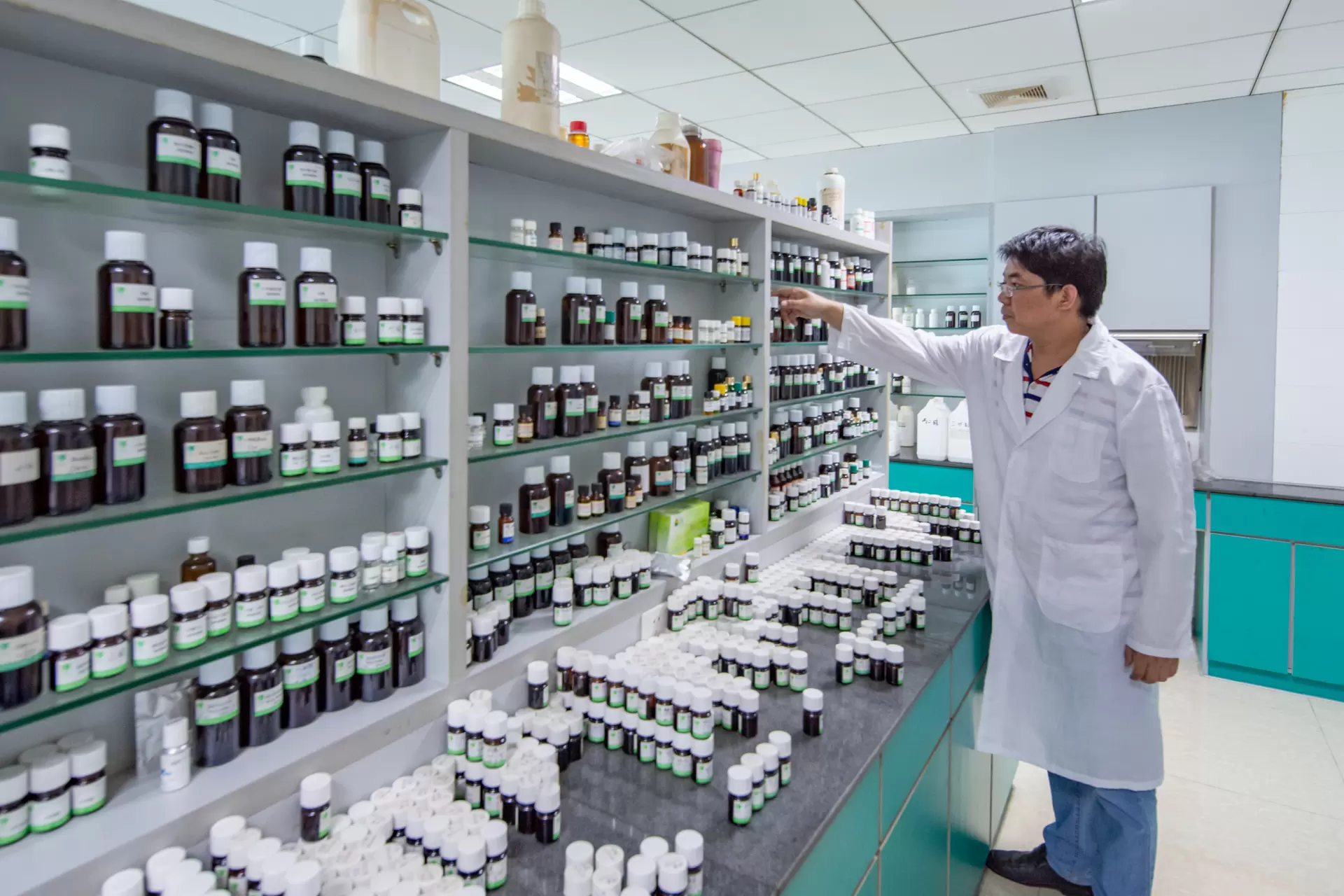
Flavor sample library in the LULIN laboratory
| Definition Field | What the Sparkling Water Brief Must State | Why It Changes Selection |
|---|---|---|
| Product Identity | Clear lime seltzer, berry sparkling water, botanical tonic, or lightly sweetened citrus water | Sets intensity, color, cloud, and finish |
| Production Water | RO, spring, or mineral water; calcium, magnesium, sodium, bicarbonate, and TDS | Minerals can mute, sharpen, or distort aroma and acid |
| Acid System | Acid type, finished pH, titratable acidity, and buffer | Carbonic acid and added acid combine at service |
| Sweetener System | None, sucrose, stevia, monk fruit, or erythritol | Sweetness and bitterness change flavor balance |
| Functional Load | Caffeine, electrolytes, vitamins, botanicals, preservatives, or juice | Actives may mask taste or destabilize a flavor system |
| Process Sequence | Batch or inline addition, shear, deaeration, carbonation point, hold, and fill | Residence time and turbulence affect dissolution and loss |
| Carbonation Target | Volumes CO2 or g/L, measurement temperature, and package pressure | Carbonic bite changes aroma, acidity, and foam |
| Package Format | 355 mL lined aluminum can, PET bottle, or glass | Scalping, liner contact, light, and headspace differ |
| Shelf Life | 12 months ambient or a defined refrigerated term | Oxidation and phase separation may appear after filling |
| Market Label | United States or other market; natural or conventional flavor; allergen policy | Composition and documents must fit the label review |
| Commercial Plan | Pilot mass, annual demand, MOQ, pack size, Incoterm, and launch date | Determines viable format, sample quantity, and continuity |
Freeze the base first. Use production water. If it is unavailable, reproduce its mineral profile and document the lot.
For a United States launch, “natural flavor” is a regulatory description, not a taste or health claim. Under 21 CFR 101.22, the supplier must support its category with composition, source, carrier, allergen, and use declarations. Food and Drug Administration requirements apply to the finished label, including the carrier and other formula components.
Write a recognizable target: “fresh lime peel, restrained juice, clean dry finish” is actionable; “premium citrus” is not. Name the desired source character and prohibited notes such as pith, solvent, perfume, cooked fruit, or lingering sweetener.
How do the base, process, serving condition, and shelf life change sparkling water flavor choice?
The sparkling-water base and process change flavor choice by altering solubility, volatility, acid perception, sweetness, oxidation, and package interaction.
| Application Variable | Likely Effect in Carbonated Water | Development Response |
|---|---|---|
| High Mineral Load | Calcium and magnesium can dry citrus; bicarbonate can flatten acid | Test actual water and record TDS |
| Low pH and Carbonic Acid | Bright notes become sharper; botanicals may become astringent | Fix pH and titratable-acidity windows |
| High-Intensity Sweetener | Stevia or monk fruit can expose green, peel, or medicinal notes | Taste the complete sweetener system |
| Caffeine or Botanicals | Bitterness and earthy notes can mask fruit | Request more mid-palate body and a clean finish |
| Deaeration or High Shear | Warm holds and turbulence can strip volatile top notes | Compare pre- and post-process samples at one dose |
| Cold Service | Aroma release falls at 4 °C | Approve at the intended serving temperature |
| Package Contact | Aluminum liner, PET, and glass retain aroma differently | Store upright and inverted in the final package |
| Light and Oxygen | Citrus, berry, and green notes may oxidize or fade | Control headspace and light exposure |
| Temperature Cycling | Emulsions can cream and powders can settle | Run transport and warehouse challenges |
Use the full carbonation application set below when sensitivity is unknown. These are working test bands, not a universal product standard.
| Carbonation Band | Nominal CO2 Mass | Development Use |
|---|---|---|
| 0 volumes CO2 | 0 g/L | Still control for flavor and acid effects |
| 1.5–2.0 volumes CO2 | about 2.9–3.9 g/L | Light-sparkling screen |
| 2.5–3.5 volumes CO2 | about 4.9–6.9 g/L | Main commercial screen |
| 4.0 volumes CO2 | about 7.8 g/L | High-carbonation and foaming challenge |
Use 3.5 volumes CO2, approximately 6.9 g/L by nominal conversion, as the high-side design benchmark for strongly carbonated water. The plant must still use its validated temperature and pressure method. A candidate approved at 2.0 volumes may disappear at 3.5 volumes.
Process order matters. Pre-deaeration flavor faces different loss from post-deaeration flavor; acid-concentrate dosing differs from direct water addition. If the addition point is unsettled, record mixing at 5 min, 10 min, and 15 min. Evaluate at 4 °C, then after 10 min and 15 min of warming. Test the package.
Which flavor formats should be screened for clear and cloudy sparkling water?
The complete format screen comprises water-soluble liquid, extract or distillate, beverage emulsion, oil-soluble flavor, spray-dried powder, encapsulated powder, beverage compound, and flavor concentrate.
| Flavor Format | Best Application Fit | Main Advantage | Main Trade-Off |
|---|---|---|---|
| Water-Soluble Liquid | Clear sparkling water and direct liquid dosing | Fast dispersion and low visible-haze risk | Volatile notes and carrier compatibility still require testing |
| Extract or Distillate | Tea, herb, spice, botanical, or source-led natural profiles | Distinct source character | Batch variation, color, cost, or incomplete profile |
| Beverage Emulsion | Intentionally cloudy citrus or tropical drinks | Carries oil-soluble notes and creates controlled cloud | Creaming, ring formation, sediment, and shear sensitivity |
| Oil-Soluble Flavor | Oil phase or a separately engineered solubilization system | Strong oil-phase character | Not suitable for direct dosing into clear water without a compatible system |
| Beverage Compound | Syrup, acid concentrate, or controlled premix | Can simplify a defined dosing stream | Dilution, density, and ingredient compatibility must be locked |
| Flavor Concentrate | Custom multi-note profile or downstream compounding | High flexibility for a specified process | Potency and carrier can vary widely among products |
| Spray-Dried Powder | Dry premix, sachet, tablet, or powder beverage | Efficient dry handling | Dissolution, dust, caking, and sediment risk |
| Encapsulated Powder | Dry systems needing oxygen, heat, or release protection | Protects selected volatiles | Incomplete release or gritty mouthfeel if poorly dissolved |
For a clear unsweetened drink, start with a water-soluble liquid. The Water Soluble Flavors for Beverage Buyers guide covers carrier and dispersion. A lime distillate may still need peel, juice, and body components for a complete profile.
Use an emulsion only when cloud belongs in the design. Powders belong in the real dry process, where temperature, agitation, and addition order expose settling. The Powder vs Liquid Food Flavors comparison supports that decision. Reject visible defects.
What dosage and carbonation benchmark should a sparkling water team use?
A sparkling-water team should use 0.20% w/w (2.0 g/kg) as the upper-quartile reference dose, screen every declared test point, and confirm the winner at 3.5 volumes CO2.
| Test Dose | Flavor per 100 kg | Flavor per 1,000 kg | Flavor per 20,000 kg | Role |
|---|---|---|---|---|
| 0.05% w/w | 0.05 kg | 0.5 kg | 10 kg | Detection and high-potency check |
| 0.10% w/w | 0.10 kg | 1.0 kg | 20 kg | Light profile |
| 0.15% w/w | 0.15 kg | 1.5 kg | 30 kg | Mid-low intensity |
| 0.20% w/w | 0.20 kg | 2.0 kg | 40 kg | Reference benchmark |
| 0.30% w/w | 0.30 kg | 3.0 kg | 60 kg | High-dose challenge |
| 0.50% w/w | 0.50 kg | 5.0 kg | 100 kg | Exceptional diagnostic point only |
The ladder is a screen, not a universal specification. If the recommendation is 0.08%, center confirmation around 0.08% but retain 0.20% for a high-side comparison. Use 0.30% to challenge masking and 0.50% only for diagnosis. Cost follows the finished dose.
Include pump accuracy, tank heel, transfer loss, and rejected batches. At 0.20% w/w, 100 kg needs 0.20 kg; 1,000 kg needs 2 kg; 20,000 kg needs 40 kg. A cheaper flavor loses its advantage when dosage doubles or defects appear.
Do not correct excessive acid, bitterness, or carbonation with more flavor. Fix the base, then repeat the screen.
Which failure modes appear after carbonation, storage, dilution, or scale-up?
Sparkling-water scale-up most often fails through volatile loss, haze, sediment, oxidation, taste distortion, package interaction, or dosing error.
| Failure Mode | Likely Trigger | First Diagnostic | Corrective Direction |
|---|---|---|---|
| Disappearing Top Note | Deaeration, warm hold, high shear, or carbonation loss | Compare sealed pre- and post-process samples | Change addition order or flavor system |
| Harsh Carbonic Finish | Excess CO2, low sweetness, or high acid | Measure CO2 and titratable acidity cold | Reset the base before dosage |
| Haze or Oil Ring | Insoluble oil, unsuitable emulsion, or hard-water interaction | Compare blank, carrier control, and flavored sample | Use a clear water-soluble system or reformulate cloud |
| Sediment or Settling | Poor powder dissolution, botanical solids, or cycling | Inspect after 24 h and after agitation | Change powder grade, filtration, or addition order |
| Oxidized Citrus | Oxygen, light, heat, or trace metals | Compare protected and exposed retained packs | Reduce oxygen pickup and select stable components |
| Sweetener Clash | Stevia, monk fruit, erythritol, or caffeine | Taste complete formula against unsweetened control | Select a cleaner finish and stronger mid-palate |
| Package Note | Scalping, migration, or liner contact | Compare glass, PET, and final can liner | Validate a compatible flavor-package pair |
| Intensity Drift | Mixing time, density difference, or pump error | Test first, middle, and last tank samples | Set mixing time and dosing tolerance |
| Scale-Up Dilution Error | Wrong mass basis or addition point | Reconcile formulation and batch mass | Lock finished-mass calculation and sequence |
The blank comes first. Test a flavor-free blank, the carrier control, the flavor in production water, and the carbonated final package in that order. If the blank hazes, investigate the base; if only the flavored sample fails, investigate format, carrier, and dose.
Citral-rich profiles can lose freshness under oxygen, light, heat, or trace metals. Do not add an antioxidant or chelator merely to rescue an unsuitable flavor; assess its regulatory and sensory effects first.
How should a sparkling water flavor sample test use controls, coded samples, and acceptance criteria?
A valid sparkling-water sample test fixes the matrix, uses a blank and carrier control, hides candidates behind randomized three-digit codes, carbonates in the final package, and sets pass criteria before tasting.
- Freeze the Formula. Record water lot, minerals, acid, sweetener, actives, pH, CO2, process order, package, and service condition.
- Prepare Controls. Make a flavor-free blank and a carrier control at the highest expected carrier level.
- Build the Dose Screen. Use two or three candidates across 0.05%, 0.10%, 0.15%, 0.20%, 0.30%, and 0.50% w/w when potency is unknown.
- Carbonate and Pack. Use 3.5 volumes CO2, the production temperature, and the final can, PET bottle, or glass package.
- Blind the Samples. Apply randomized three-digit codes and serve a balanced order at 4 °C to at least eight trained internal assessors.
- Challenge Finalists. Inspect sealed packs upright and inverted at 0 days, 7 days, 30 days, 90 days, 180 days, and 365 days for a 12-month program.
Keep the codes sealed. ISO 4120:2021 supports triangle testing after a process or package change. ASTM E1871-17 informs controlled serving, and ASTM E2454-20 supports sensory shelf-life planning. A detectable difference is not automatically a commercial failure. Keep conditions identical.
| Acceptance Attribute | Reference Release Criterion |
|---|---|
| Flavor Identity | Mean at least 7 on a 9-point identity scale |
| Off-Note Limit | Mean no higher than 2 on a 9-point defect scale |
| Intensity Retention | Change no greater than 1 point from the approved day-zero score |
| Clear Product | Turbidity drift no greater than 2 NTU from the matched blank |
| Visible Stability | No ring, oil, sediment, or persistent flocculation after 24 h |
| pH Control | Drift no greater than 0.10 pH unit |
| Carbonation Control | Difference no greater than 0.2 volumes CO2 |
| Fill Weight | Difference no greater than 2 g from the approved target |
| Package Pressure | Within the plant specification; investigate an unexplained shift over 20 kPa |
| Package Condition | No leakage, liner odor, swelling, paneling, or abnormal pressure |
Sensory and physical results must agree. No ring is acceptable. Retain the flavor lot, preparation date, operator, actual CO2, fill weight, package code, and storage condition. Blind every candidate.
What belongs in a sparkling water flavor RFQ before dosage or performance is discussed?
A sparkling-water RFQ must describe the reproducible finished beverage before it asks a supplier to quote dosage, stability, price, or lead time.
| RFQ Section | Required Information |
|---|---|
| Product and Market | Product name, target country, label category, launch date, and pack size |
| Base Composition | Water analysis, acid, sweetener, preservative, caffeine, botanicals, colors, and juice |
| Sensory Target | Identity, top/mid/base notes, intensity, finish, reference, and rejected notes |
| Process Conditions | Tank size, addition point, shear, deaeration, carbonation, maximum temperature, and fill method |
| Package and Storage | Material, liner, closure, headspace, light exposure, distribution, and shelf life |
| Compliance Documents | Flavor category, carrier, allergen, origin, GMO, vegan, halal, kosher, and market statement |
| Commercial Terms | Sample mass, annual volume, MOQ, pack size, price breaks, Incoterm, and required dates |
Use this copy-ready brief:
Project: Clear, unsweetened lime-ginger sparkling water for the United States
Base: RO water with a defined mineral package; finished pH 3.2–3.4; no color or preservative
Process: Flavor into deaerated base, inline carbonation, counterpressure fill
Carbonation: 3.5 volumes CO2, approximately 6.9 g/L nominally
Package: 355 mL lined aluminum can; approved fill-weight tolerance 2 g
Service: 4 °C, followed by checks after 10 min and 15 min
Shelf life: 12 months ambient; inspect at 0 days, 7 days, 30 days, 90 days, 180 days, and 365 days
Sensory target: Fresh lime peel, restrained juice, clean ginger finish; no haze, oil ring, pith, or perfume
Screen: Water-soluble liquid at 0.10%, 0.15%, and 0.20% w/w, expanding to the full ladder if potency is uncertain
Documents: Specification, TDS, SDS, lot CoA, carrier, allergen, origin, regulatory, certification, storage, and change-control records
Attach the water analysis and package specification. They prevent avoidable rework.
What seven steps turn sparkling water flavor samples into a purchase order?
Seven gated steps turn sparkling-water samples into a defensible purchase order by keeping formulation, sensory, documentation, and commercial approval tied to the same candidate and lot.
- Issue One Brief. Send every supplier the frozen matrix, profile, documents, timing, and annual volume.
- Check the Paper Set. Review specification, TDS, SDS, carrier, allergen, origin, certification, shelf-life, and storage records.
- Run the Coded Screen. Compare one preparation protocol and reject samples outside identity, clarity, or defect limits.
- Confirm the Dose. Center on the supplier recommendation, include 0.20%, and calculate cost per 1,000 kg.
- Complete the Pilot. A 1,000 kg or larger run verifies dosing, mixing, CO2, fill, foam, package interaction, and loss.
- Release the Finalist. Approve the lot CoA, retained samples, change notice, and 365-day program.
- Place the Order. Record code, dose, package, MOQ, timing, Incoterm, price tier, and deviation owner.
Do not let a quotation outrun approval. Name the exact product and require advance notice before any carrier, raw material, site, process, specification, or location change. Name the exact lot.
Which supplier red flags should disqualify a sparkling water flavor candidate?
A supplier should be removed from the sparkling-water shortlist when it cannot identify the tested product, reproduce the sample conditions, document composition boundaries, or support change control.
| Disqualifying Red Flag | Why Procurement Should Stop |
|---|---|
| No Finished-Matrix Test | Neat-flavor aroma does not predict carbonation, clarity, or package stability |
| Hidden Carrier Identity | Dosing, label, allergen, and compatibility review cannot be completed |
| Dose Without Conditions | A percentage without base, pH, temperature, CO2, and process context is not transferable |
| Missing Lot CoA | The delivered lot cannot be tied to the approved specification and sample |
| Uncontrolled Product Change | A carrier, source, site, or process can change without buyer review |
| No Package Evidence | Glass-only data cannot establish performance in PET or a lined can |
| Price Without Dose Economics | Unit price conceals cost per 1,000 kg and rework exposure |
| Vague Lead Time | The supplier cannot commit sample timing, production scheduling, MOQ, or pack size |
One red flag can be enough. A low price does not compensate for an unidentified carrier, missing CoA, or uncontrolled change.
Which supplier facts and documents belong in the final sparkling water recommendation?
The final sparkling-water recommendation must state the exact flavor, format, carrier, dose, test conditions, documents, certification, MOQ, timing, price basis, and change-control owner.
| Buying Record | Required Direct Statement |
|---|---|
| Product Identity | Exact code, flavor category, liquid or powder format, carrier, appearance, and application range |
| Technical File | Specification, Technical Data Sheet, Safety Data Sheet, lot Certificate of Analysis, shelf life, and storage |
| Compliance File | Ingredient, carrier, allergen, GMO, vegan, halal, kosher, and Country of Origin declarations |
| Food Safety | ISO 22000, HACCP, traceability, complaint handling, and change notification |
| Commercial Record | Sample timing, MOQ, pack size, production scheduling, price tiers, Incoterm, and export documents |
| Application Support | Matching, dose adjustment, process trial, stability review, and production troubleshooting |
LULIN FLAVOR is operated by Quanzhou Lvlin Bioengineering Co., Ltd. in Quanzhou, Fujian. Since 2001, the manufacturer has run three production lines across more than 8,000 m², employed more than 50 people, and maintained an application laboratory. More than a dozen engineers support applications; senior members bring over 20 years of flavor experience.
| LULIN FLAVOR Supply Fact | Direct Buying Detail |
|---|---|
| Available Formats | Liquid, water-soluble, and powder flavors |
| Food Safety Systems | ISO 22000 and HACCP |
| Application Samples | 3–5 business days |
| Liquid Flavor MOQ | From 25 kg |
| Powder Flavor MOQ | From 20 kg |
| Production Scheduling | 10–15 business days after sample and formula approval |
| Export File | Specification, TDS, SDS, lot CoA, carrier, allergen, origin, certification, and export paperwork |
A certificate never replaces the carbonated package test. Approve the system, not the neat aroma.
Frequently asked questions about sparkling water flavoring
These buyer questions resolve the most common sparkling-water format, dose, carbonation, stability, labeling, sample, and document decisions.
What is the best flavor format for clear sparkling water?
A water-soluble liquid flavor is the best first screen for clear sparkling water because it disperses quickly and limits haze and oil-ring risk. Emulsions fit intentionally cloudy drinks; powders suit processes designed for complete dissolution.
How much flavoring should a sparkling water manufacturer use?
Start with the supplier recommendation, then screen 0.05%, 0.10%, 0.15%, 0.20%, 0.30%, and 0.50% w/w when potency is unknown. Use 0.20% w/w (2.0 g/kg) as the upper-quartile reference benchmark, 0.30% as a high-dose challenge, and 0.50% only as an exceptional diagnostic point.
What are natural flavors in sparkling water?
Natural flavors in sparkling water come from qualifying natural sources and processes and serve primarily as flavor. The term does not disclose the formula. For United States review under 21 CFR 101.22, obtain composition, carrier, source, allergen, and regulatory declarations.
Does natural sparkling water flavoring perform better than artificial flavoring?
Natural flavoring does not automatically outperform artificial flavoring. A natural profile can support the label; an artificial composition may deliver tighter consistency, lower dosage, or better shelf stability. Decide by finished-beverage performance and cost per 1,000 kg.
How much carbonation should be used when screening sparkling water flavor?
Screen 0 volumes CO2, 1.5–2.0 volumes CO2, 2.5–3.5 volumes CO2, and 4.0 volumes CO2 when process sensitivity is unknown. Use 3.5 volumes, approximately 6.9 g/L nominally, as the high-side design benchmark for strongly carbonated water.
Why does sparkling water develop haze, sediment, or an oil ring?
Haze, sediment, and oil rings usually come from insoluble oil, an unsuitable emulsion, hard-water interaction, incomplete powder dissolution, or temperature cycling. Compare the blank, carrier control, and flavored package before changing the water treatment system.
Can sparkling water flavoring survive pasteurization?
Some sparkling-water flavors tolerate pasteurization, but the real time-temperature profile requires testing in the carbonated formula and package. Give the supplier maximum temperature, hold, heating method, and cooling curve.
How should sparkling water flavor samples be evaluated?
Evaluate sparkling-water samples behind randomized three-digit codes against a flavor-free blank and carrier control. Test at target CO2 in the final package, score identity, intensity, defects, finish, and stability, then repeat after process stress and planned storage.
What documents should a sparkling water flavor supplier provide?
A supplier should provide the specification, TDS, SDS, lot CoA, ingredient and carrier declaration, allergen statement, shelf-life and storage guidance, destination-market statement, and certification records. The quote should state pack size, MOQ, price tiers, sample timing, production scheduling, and change control.
Send LULIN FLAVOR a scale-ready sparkling water brief
A scale-ready LULIN FLAVOR request states the base, target market, 3.5-volume CO2 benchmark, pH, process temperature, package, 12-month target, sensory reference, and sample quantity.
LULIN FLAVOR supplies liquid, water-soluble, and powder options, with application samples in 3–5 business days. Send the water analysis and package specification; request the specification, TDS, SDS, lot CoA, carrier, allergen, regulatory, storage, certification, and export records.
Use the Food Flavor Sample Request for B2B Buyers for a controlled screen or Contact LULIN FLAVOR for Food Flavor Project Inquiries for a complete quotation. Food Flavor Formulation Support for B2B R&D can prepare the first production trial, while Flavor Concentrates for Food Manufacturing provides adjacent concentrate context.
Document the decision. Record the approved code, format, dose, CO2, pH, package, sensory score, stability result, documents, MOQ, lead time, and change-control owner so R&D and procurement release the same product.