Published
Cranberry Flavoring
Cranberry flavoring is a formulated system that reconstructs tart American cranberry juice, cocktail, dried fruit, or candy character. Specify fruit reference, quinic acidity, green-benzoate lift, and finish, then screen water-soluble liquid at 0.05%, 0.10%, 0.20%, and 0.30% w/w. Use 0.30% w/w as the high-end design benchmark in the finished matrix.
Last updated: 2026-09-01
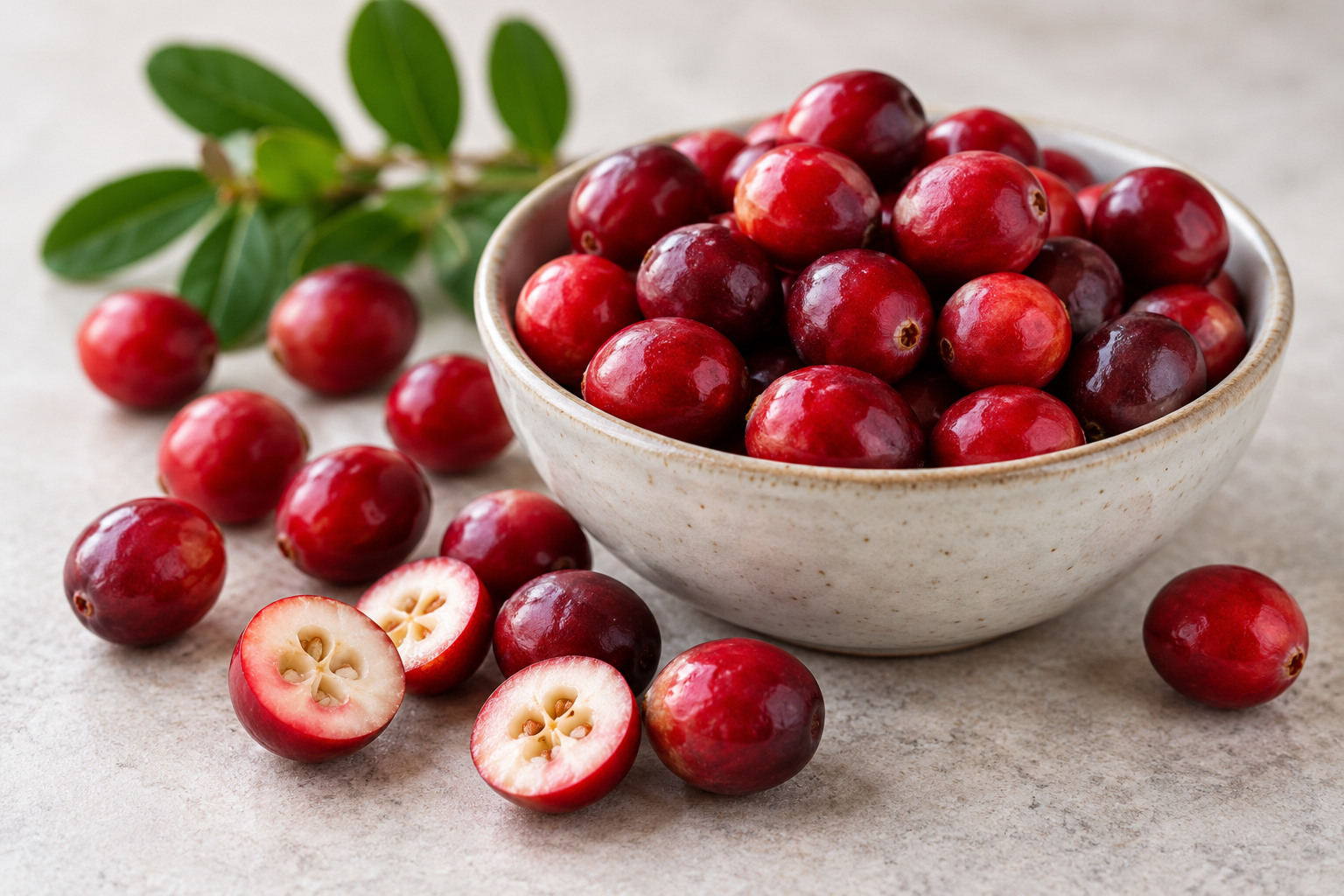
Cranberry sensory reference: an AI-generated sensory reference for this flavor brief.
How should a cranberry flavor brief separate juice, cocktail, and candy from generic tart berry?
Precision beats color language. Brief cranberry flavoring as fruit reference, opening, body, acid type, sweetness, astringent finish, color, and serving temperature. “Tart red berry” is not a specification. Raspberry candy, cherry gummies, pomegranate drinks, and grapefruit energy bases can all pass that phrase.
Write one scoreable sentence. Example: “Unsweetened American cranberry juice, green-benzoate lift in the first 2 s, quinic-citric bite through the mid-palate, restrained sweetness, and a dry astringent finish at 4 °C.” State whether cranberry leads or supports grapefruit, orange, apple, raspberry, cherry, pomegranate, vanilla, cinnamon, or ginger.
| Profile dimension | Options to state in the brief | Check in the finished product |
|---|---|---|
| Fruit reference | American Cranberry juice, sweetened Cocktail Drink, Dried Cranberry, sauce fruit, or candy cranberry | Identity at aroma and first sip; reject generic red berry |
| Ripeness and cook state | Raw-tart, cocktail-round, jam-cooked, or dried-sweet | Green bite versus cooked jam after process |
| Opening | Green, benzoate, benzaldehyde, floral-terpene, or low-aroma | Recognition at 0–2 s and in headspace |
| Mid-palate | Juice body, cocktail fruit, skin, candy fruit, or hollow | Body at 2–10 s in the actual base |
| Acid architecture | Quinic-forward, citric-bright, malic-juicy, or sour-candy | Sourness at the final pH, not in plain water |
| Sweetness | Unsweetened, cocktail-balanced, dried-fruit sweet, or confectionery | Sweetness timing and syrupy aftertaste |
| Finish | Dry-astringent, clean-tart, jammy, vanilla-spice, or lingering candy | Character at 10–60 s; no medicinal or woody tail |
| Appearance | Clear, cloudy, cranberry-red, pink, or no color contribution | Separate visual expectation from aroma intensity |
Cranberry flavoring is not juice, puree, concentrate, dried fruit, or a PAC-standardized extract. Flavor supplies aroma and taste. The formula still supplies sugar, acid, color, and fruit solids. Anthocyanin red from peonidin and cyanidin is a color brief. A-type proanthocyanidins that mark cranberry juice in dietary-supplement work do not arrive with a flavor code. Write PAC content, juice percentage, or shade as separate specifications. A flavored cranberry drink is not cranberry juice; 21 CFR 101.30 juice-percentage rules and a 7.5 °Brix single-strength cranberry reference apply to juice claims, not to flavor dose. Commercial United States fruit is American cranberry, not lingonberry. Cultivar names such as Early Black, Ben Lear, and Crimson Queen belong in a juice-style brief when the team has a fruit target.
Neighbor profiles steal vague cranberry briefs.
| Neighbor | Shared cues | Distinguishing cranberry checks |
|---|---|---|
| Raspberry | Red berry, acid, confectionery use | Floral ionone and seedy pulp versus quinic bite and benzoate |
| Cherry | Benzaldehyde, red fruit, candy | Stone-fruit almond versus green-tart cranberry juice |
| Pomegranate | Tart red fruit, drying finish | Winey grape and molasses versus cocktail cranberry and green lift |
| Grapefruit | Bitter-tart Energy Drink pairings | Peel oil and nootkatone versus berry-benzoate |
| Red apple | Acid, green notes | Malic juicy flesh versus quinic cranberry and astringent tail |
The words “natural,” “artificial,” and “natural flavor” follow composition and destination-market rules. They cannot be inferred from the word cranberry or from a product nickname. The B2B guide to artificial flavor covers that labeling boundary under 21 CFR 101.22. The food-manufacturing flavor concentrate category handles broader format navigation. This page stays on cranberry sensory direction, matrix, process, sampling, and RFQ detail.
Which cranberry top, middle, and base notes change juice, cocktail, dried-fruit, and energy-drink projects?
Cranberry identity is a timed sequence, not a single tart-red adjective. Top notes create recognition in the headspace and the first 2 s. Middle notes carry fruit from 2 s to 10 s. Base notes decide the 10–60 s finish. Wrong timing leaves a cold drink with a fleeting opening, an empty middle, or a cooked tail.
Green C6 aldehydes such as hexanal and (E)-2-hexenal give raw-juice lift. Benzaldehyde, benzyl alcohol, and ethyl benzoate add cranberry’s phenolic edge. α-Terpineol and linalool can add a light terpene floral. Too much green reads leafy. Too much benzaldehyde reads Cherry Candy or almond. Sparkling Water wants a short opening. Energy Drink bases often want a louder top that still reads cranberry rather than grapefruit peel. Fat, protein, starch, and gums suppress juice body first; raising only the top note does not fill an empty middle. Cocktail Drink projects need rounder fruit than unsweetened juice. Dried Cranberry bakery fillings need cooked fruit, not a raw-juice spike. A dry astringent tail belongs on juice-style cranberry. Jam, vanilla, cinnamon, and orange zest can anchor sauce. Excess base reads as prune, wood, or medicine.
| Cranberry direction | Top | Middle | Base and finish | First applications |
|---|---|---|---|---|
| Fresh Juice | Green aldehyde, benzoate, light benzaldehyde | Tart juice and skin | Short dry-astringent tail | Still drinks, juice blends, iced tea |
| Cocktail Drink | Brighter fruit, less leafy green | Round cranberry with sugar-acid balance | Clean sweet-tart finish | RTD cocktail, syrups, fountain bases |
| Dried Cranberry | Gentle cooked fruit | Sweet-tart dried fruit body | Jam persistence | Cereal, bakery inclusions, trail mix coatings |
| Cranberry Sauce | Cooked fruit, orange zest | Pulp, sugar, warm spice | Cinnamon-vanilla length | Holiday sauces, glazes, bakery fillings |
| Hard Candy | Fast tart impact | Candy cranberry body | Clean sweet-tart tail | Gummies, hard candy, chews |
| Energy Drink | High-impact berry-citrus lift | Cranberry-grapefruit body | Short, non-peel finish | Carbonated energy, sports drinks |
| Sparkling Water | High top, low sweetness | Light juice impression | Very short clean tail | Flavored sparkling water |
Dairy Dessert, Bakery Filling, and Supplement Liquid follow the same timing logic: softer fruit through cream, cooked jam in baked fillings, and juice-like identity over botanicals without a medicinal tail. State the blend role in one clause: “cranberry leads over grapefruit,” “orange supports the sauce middle,” or “vanilla rounds a bakery finish.”
How do water, fat, protein, sugar, salt, quinic acidity, and serving temperature change cranberry perception?
The finished formula decides whether cranberry flavoring tastes like juice, cocktail, candy, or a muted protein drink. Compare release in the production base at measured pH, soluble solids, protein, fat, and serving temperature. Water is a triage medium.
| Variable | Typical sensory effect | Practical first bracket | Measurements to retain |
|---|---|---|---|
| Water | Dilution thins juice body; dissolved solids slow release | Production dilution plus 0%, 5%, and 10% soluble solids | Total solids, clarity, dilution method |
| Fat | Softens quinic bite and delays hydrophobic aroma | 0%, 3%, and 10% fat when the product allows | Fat source, emulsion state, mouth-coating |
| Protein | Binds aroma, stacks astringency, or adds beany notes | 0%, 2%, and 8% protein in a beverage model | Protein source, hydration time, viscosity |
| Sugar and sweetener | Adds cocktail body; can bury juice freshness | 5%, 10%, and 15% soluble solids, or the actual ladder | °Brix, sweetener identity, sweetness timing |
| Salt and minerals | Low levels can lift sweetness; minerals can turn metallic | 0%, 0.05%, and 0.15% salt-equivalent where permitted | Salt species, conductivity, mineral load |
| Acid and pH | Sets cranberry’s quinic-citric bite and protein charge | pH 2.3, pH 2.5, pH 2.8, pH 3.2, pH 3.6, or pH 4.2 | pH to 0.1 unit, titratable acidity, acid species, hold time |
| Temperature | Cold mutes aroma; warmth raises volatility and cooked notes | 4 °C, 20 °C, 25 °C, and 40 °C where relevant | Sample temperature and equilibration time |
Lock the beverage first. Hold acid, sweetness, carbonation, and fill condition constant. Unsweetened cranberry juice typically sits near pH 2.3 to pH 2.5. Cocktail Drink products often sit nearer pH 2.6 to pH 2.8 with higher sugar. Yogurt sits near pH 4.2. Protein Shake bases may sit near pH 3.5 or nearer pH 7.0. pH alone is not sourness. Record titratable acidity and the acid species: quinic, citric, malic, or a mixed food-acid system.
Sugar rebuilds cocktail identity and can erase juice identity. High-intensity sweeteners may leave a metallic tail on an already astringent cranberry profile. Bracket the real sweetener when the formula uses sucralose, acesulfame potassium, stevia, or a polyol. Milk, whey, pea, or soy protein can suppress fruit; cranberry’s drying finish stacks with protein dryness. Fat delays oil-compatible notes. Salt still matters in electrolyte sports bases and savory glazes. Test refrigerated products at 4 °C, shelf-stable products at 20 °C or 25 °C, and warm-serve checks at 40 °C. Score onset, body, and finish at 0 s, 2 s, 10 s, 30 s, and 60 s.
Which cranberry flavor formats belong on a first sample board?
Match cranberry flavoring to the continuous phase, appearance target, and dosing method before comparing percentages. The complete first-board set is Water-soluble liquid, Oil-soluble liquid, Oil-in-water emulsion, Spray-dried powder, and Encapsulated powder.
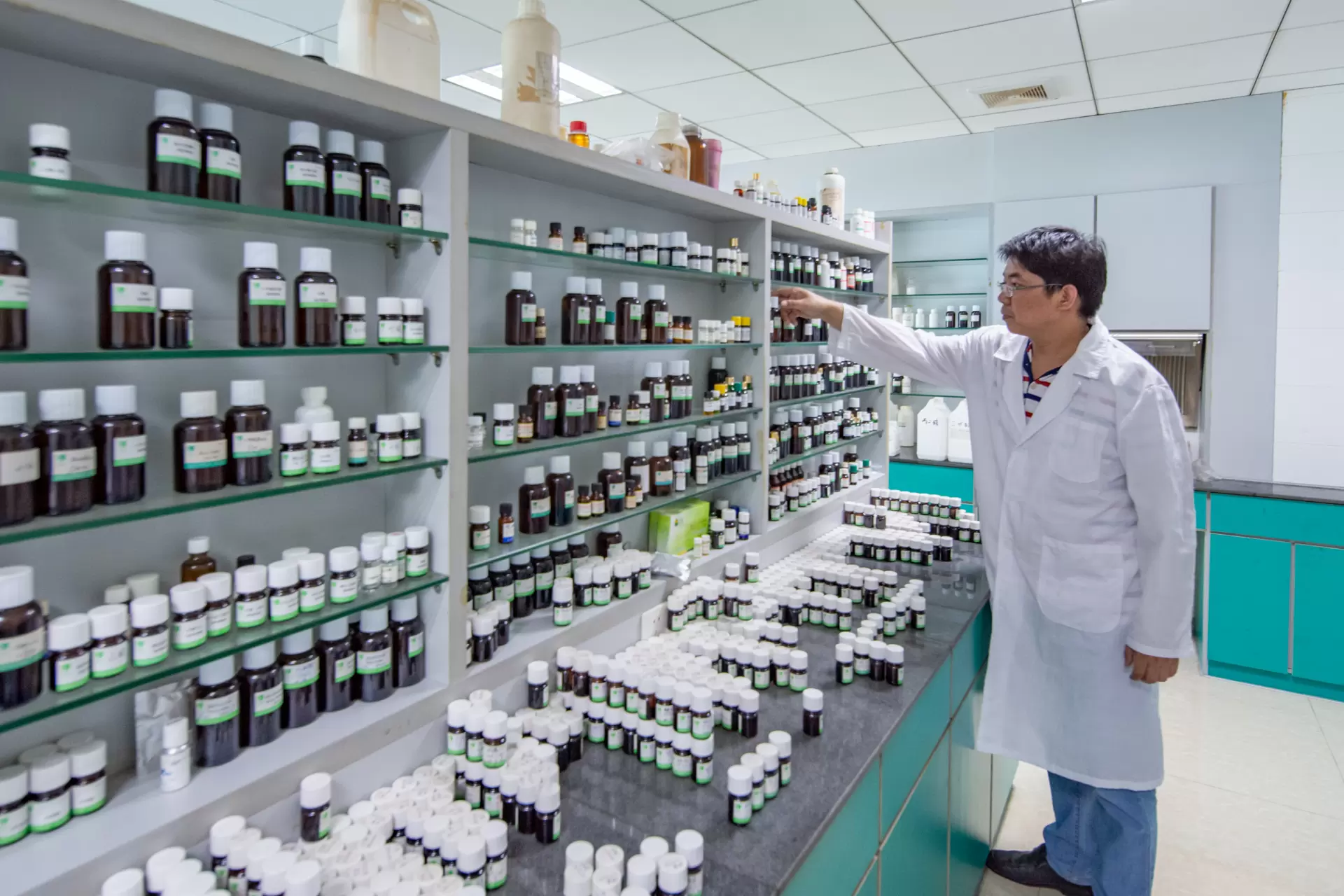
Flavor sample library in the LULIN laboratory
| Format option | Best first applications | Main advantage | Failure modes to screen |
|---|---|---|---|
| Water-soluble liquid | Clear drinks, syrups, jellies, gummies, iced tea | Fast wet-tank dispersion and easy dose adjustment | Haze, precipitation, acid shift, heat loss of green top notes |
| Oil-soluble liquid | Chocolate, fat fillings, coatings, oil systems | Carries cranberry through a fat phase | Oil ring, poor aqueous dispersion, delayed release |
| Oil-in-water emulsion | Cloudy beverages, dairy, sauces, bakery creams | Controlled dispersion of oil-affine notes in water | Separation, viscosity change, homogenization dependence, neck ring |
| Spray-dried powder | Dry beverage mixes, bakery premixes, seasonings, stick packs | No added process water; dry dosing | Caking, dust, segregation, slow hydration, carrier taste |
| Encapsulated powder | High heat, oxygen-sensitive, or delayed-release products | Protects volatile green and benzoate notes | Late release, carrier taste, particle-mouthfeel impact |
These labels describe delivery systems, not sensory grades. A Water-soluble liquid and a Spray-dried powder can target the same Fresh Juice direction and still diverge after hot fill. An Oil-in-water emulsion can be correct for a cloudy Cocktail Drink and wrong for Sparkling Water. An Oil-soluble liquid can work in a fat coating and fail in a transparent drink.
For a first application screen, test a Water-soluble liquid at 0.05%, 0.10%, 0.20%, and 0.30% w/w. Test a Spray-dried powder or Encapsulated powder at 0.20%, 0.40%, 0.50%, and 0.80% w/w. Use 0.10% w/w (1 g/kg) as the liquid reference point and 0.30% w/w (3 g/kg) as the high-end design benchmark for a demanding liquid screen. Use 0.50% w/w (5 g/kg) as the high-end powder reference. They are not legal limits and do not replace the selected item’s technical sheet.
Do not treat equal percentages as equal strength across formats. Ask for carrier, moisture, flow, density, solubility, clarity, heat response, and storage. Typical liquid carriers include propylene glycol, ethanol, glycerin, and water. Typical powder carriers include maltodextrin and gum acacia. Taste dry blends after 5 min, 10 min, and 30 min. Inspect emulsions after 0 days, 7 days, 14 days, and 28 days. The powder-versus-liquid guide frames handling before sampling. Request specific gravity, refractive index, pH, emulsion Brix, powder loss on drying, and storage at 15 °C, 20 °C, or 25 °C. Pack examples include 1 kg, 5 kg, 10 kg, 20 kg, and 25 kg. Sample quantities often start at 30 g, 50 g, 100 g, 200 g, 500 g, or 1 kg.
Which heat, oxygen, and package conditions strip cranberry green lift or leave cooked fruit?
Heat changes the opening. Oxygen, light, shear, acid hold, freezing, and package contact can also shift cranberry toward muted juice, cooked jam, oxidized cardboard, or candy. Sample every major step, then use the final package.
| Condition | Possible change | Comparison to run |
|---|---|---|
| Pasteurization at 72 °C or 85 °C; Hot Fill at 90 °C or 95 °C | Green top-note loss; cooked-fruit middle | Pre-process versus post-process at the same age |
| UHT at 135 °C or Retort at 121 °C | Stronger cooked, jammy, brown, or burnt notes | Heat-tolerant middle/base versus late-added top where the process permits |
| Baking at 160 °C, 175 °C, or 190 °C | Jam development, browning, or hollow fruit | Flavor in dough versus flavor in the baked piece |
| High shear or homogenization | Faster dispersion, droplet change, or aroma stripping | Bench mixing versus process-representative pass |
| Acid hold and freeze-thaw | Brighter sourness, later drift, or delayed release | Day 0 versus planned hold; fresh versus thawed |
| Oxygen, light, and package contact | Faded green-benzoate, cardboard, terpene sorption | Glass reference versus production bottle, pouch, or liner |
| Storage | Gradual loss or longer cooked finish | 0 days, 7 days, 14 days, 28 days, 56 days, and 90 days at 4 °C, 20 °C, 25 °C, and 40 °C |
Record addition order, mixing time, hydration, shear, peak temperature, hold time, cooling rate, carbonation, fill temperature, headspace, package material, and closure. Score cranberry-red appearance separately from blind flavor. Cranberry fruit contains natural benzoic acid; that fact does not replace preservative or label review for a beverage that also uses sodium benzoate or potassium sorbate. Keep fruit chemistry, added preservative, and flavor composition on separate specification lines.
How should buyers compare cranberry flavor samples in the real application base?
Controls reveal matrix effects. Compare coded cranberry samples in the finished base: clean control, current or reference flavor, and a dose ladder. Prepare by mass with identical lots, fixed equilibration, production-representative vessels, and the intended serving temperature.
| Code | Sample construction | Purpose | Minimum observations |
|---|---|---|---|
| C0 | Finished base without cranberry flavoring | Shows the matrix’s own aroma and aftertaste | pH, °Brix, viscosity, appearance, sensory profile |
| C1 | Current or reference cranberry system | Sets the comparison denominator | Dose, lot, process, package, sensory scores |
| T1 | Candidate at 0.05% liquid or 0.20% powder | Low-impact starting point | Identity, top, body, finish, physical fit |
| T2 | Candidate at 0.10% liquid or 0.40% powder | Liquid reference screen | Same measures plus cost-in-use estimate |
| T3 | Candidate at 0.20% liquid or 0.50% powder | Stronger direction if the base suppresses fruit | Carrier, bitterness, astringency, color, aftertaste |
| T4 | Candidate at 0.30% liquid or 0.80% powder | High-end design benchmark / escalation | Use after item-specific technical review |
Use a 0–10 anchored scale: 0 = not perceived, 3 = distinct but acceptable, 5 = rejection threshold, 7 = strong, and 10 = extreme. Score cranberry identity, green-benzoate lift, juice versus cocktail body, quinic acidity, sweetness, cooked note, bitterness, astringency, mouth-coating, appearance, and overall balance at 0 s, 2 s, 10 s, 30 s, and 60 s. Add 90 s or 120 s for a persistent dairy, protein, or candy finish.
A paired comparison asks which code is closer to the benchmark. A triangle test asks whether one sample differs from two identical samples. ISO 4120:2021, ISO 13299:2016, ISO 8586:2023, and ASTM E1871-17 are useful methods for a sensory or quality team. Repeat the winner on process-representative equipment and in the production package.
Diagnose before switching suppliers. If the opening is leafy, reduce green aldehydes rather than cutting the whole dose. If the sample reads as cherry, lower benzaldehyde and rebuild quinic juice body. If the middle is empty after protein hydration, change format or middle-note construction before jumping from 0.10% to 0.30%. If Hot Fill leaves only cooked jam, test Encapsulated powder, a later addition point, or a heat-tolerant Cocktail Drink direction.
What belongs in a cranberry flavoring RFQ for a United States food project?
Define one product. The RFQ also needs one sensory sentence, one process, one market, and one decision date. That focus lets a supplier choose Water-soluble liquid, Oil-soluble liquid, Oil-in-water emulsion, Spray-dried powder, or Encapsulated powder instead of a generic berry sample.
| RFQ field | Details to provide | Why it matters |
|---|---|---|
| Finished product | Beverage, Sparkling Water, Energy Drink, Protein Shake, yogurt, ice cream, bakery, filling, syrup, gummy, Hard Candy, Cranberry Sauce, seasoning, dry mix, or Supplement Liquid; serving size and temperature | Sets release and format requirements |
| Sensory target | Fruit reference, top/middle/base, intensity, acid, sweetness, astringency, finish, color, benchmark | Converts “cranberry” into a scoreable brief |
| Formula | Water, fat, protein, sugar/°Brix, salt/minerals, acid/pH, alcohol, gums, caffeine, botanicals, and competing flavors | Predicts suppression and interaction |
| Process | Mixing, hydration, shear, homogenization, pasteurization, Hot Fill, UHT, retort, baking, freezing, cooling, carbonation, and fill | Determines process-survival tests |
| Format | Water-soluble liquid, Oil-soluble liquid, Oil-in-water emulsion, Spray-dried powder, Encapsulated powder, or open to review | Narrows carrier and handling choices |
| Evaluation | Controls, dose ladder, panel date, pilot date, acceptance limits, and package | Makes the decision repeatable |
| Market and label | United States, Canada, European Union, or another market; Natural flavor, Natural flavor WONF, Natural and artificial flavor, or Artificial flavor | Directs market and label review |
| Documents | COA, SDS/MSDS, TDS, allergen, natural/artificial wording, ISO 9001, ISO 22000, FSSC 22000, Halal, Kosher, vegan, non-GMO, organic, or country-specific files as required | Defines the QA file request |
| Commercial plan | Trial and production quantity, 1 kg / 5 kg / 10 kg / 20 kg / 25 kg pack preference, storage route, target cost-in-use, purchasing stage | Frames MOQ, price, lead-time, and logistics questions |
For United States products, ask QA to review the composition under 21 CFR 101.22 and, where synthetic flavoring substances are in scope, 21 CFR 172.515. Juice-percentage claims, if any, follow 21 CFR 101.30. Use applicable material from the U.S. Food and Drug Administration and the Flavor and Extract Manufacturers Association. For European Union projects, review Regulation (EC) No 1334/2008 with the importer. The FDA labeling rule and FEMA Flavor Ingredient Library are starting references, not a substitute for item-level review. Sensory method context is available from ISO 13299:2016.
LULIN FLAVOR is the English brand of QUANZHOU LVLIN BIOENGINEERING CO., LTD., established in 2001 in Quanzhou, Fujian, China. The company develops, produces, and sells food-grade flavors and daily-use fragrances. Its public company profile describes 12+ engineers with 20+ years of flavor development and application experience, 3 modernized production lines, 50+ employees, a 6-acre factory area, and more than 8,000 m² of building area. Food categories include beverage, candy and confectionery, bakery, and sparkling-wine or carbonated alcoholic beverage flavors. Its application laboratory can refine, adjust, and create formulas and keeps mature formulas for reference.
Documents follow the item. Company capability does not set a universal dose, certification, MOQ, price, package, shelf life, storage condition, or schedule. Ask for those details in the RFQ. Use formulation support for R&D for matrix adjustment and the compliance document guide for files.
Frequently asked questions about cranberry flavoring
What is cranberry flavoring used for in B2B food production?
Cranberry flavoring builds a defined cranberry aroma and taste in beverages, Cocktail Drink bases, Sparkling Water, Energy Drink, dairy desserts, bakery products, fillings, syrups, confectionery, Cranberry Sauce, seasonings, dry mixes, and Supplement Liquid. The suitable profile and format depend on the finished matrix, process, serving temperature, target market, and label wording.
How should a buyer describe a cranberry flavor profile without vague sensory adjectives?
State the fruit reference, cook state, top aroma, mid-palate body, quinic acidity, sweetness, astringent finish, color expectation, blend role, and serving temperature. A sentence such as “unsweetened American cranberry juice with green-benzoate lift at 0–2 s and a dry finish at 4 °C” gives the panel a scoreable target.
Is cranberry flavoring the same as cranberry juice, extract, or fruit powder?
No. Flavoring is a formulated aroma-and-taste system, while juice, extract, or fruit powder carries a different mix of fruit solids, color, acidity, and process behavior. Flavoring also does not automatically supply PAC content. Compare aroma, taste, solids, color, stability, and cost-in-use in the finished product before choosing one.
Which cranberry flavor format should be tested first?
Match the format to the product phase and factory route: Water-soluble liquid for many water systems, Oil-soluble liquid for fat systems, Oil-in-water emulsion for controlled dispersion, Spray-dried powder for dry blends, and Encapsulated powder for heat or delayed release. Confirm carrier, solubility, heat response, storage, and handling in the actual formula.
What starting dosage should be screened for cranberry flavoring?
Screen 0.05%, 0.10%, 0.20%, and 0.30% w/w for Water-soluble liquid, using 0.10% as the liquid reference and 0.30% w/w (3 g/kg) as the high-end design benchmark. Screen 0.20%, 0.40%, 0.50%, and 0.80% w/w for powder, using 0.50% w/w (5 g/kg) as the high-end powder reference. Confirm the selected item’s technical guidance before scale-up.
How do acid, sugar, protein, and temperature change cranberry flavor?
Quinic and citric acidity sharpen juice identity, sugar can push cranberry toward cocktail or candy, protein can bind aroma and stack astringency, and cold service mutes the opening. Hold production values constant during the first comparison, then bracket one variable at a time with measured pH, °Brix, protein, and serving temperature.
Can cranberry flavoring survive pasteurization, hot fill, UHT, or baking?
It can be evaluated for those processes, but survival depends on composition, addition point, peak temperature, hold time, shear, cooling, package, and storage. Compare pre- and post-process samples at 72 °C, 85 °C, 95 °C, 121 °C, 135 °C, or the actual bake curve, and retain a production-package sample before approving a heat-stability statement.
How should cranberry flavor samples be compared in the real application?
Use coded samples in the real application base with a clean control, a current or reference flavor, and a dose ladder through 0.30% liquid or 0.50% powder. Score aroma, attack, body, acidity, sweetness, astringency, finish, aftertaste, appearance, and process fit at fixed temperatures and time points, then repeat the selected treatment on a pilot.
What should be sent to a cranberry flavoring supplier in an RFQ?
Send the application, sensory sentence, formula variables, process, preferred format, destination market, label route, sample quantity, pilot date, and acceptance criteria. List the required COA, SDS/MSDS, TDS, allergen, natural/artificial, ISO 9001, ISO 22000, Halal, Kosher, vegan, non-GMO, organic, or country-specific documents for the selected item.
Can LULIN FLAVOR develop a custom cranberry flavoring direction?
LULIN FLAVOR provides food-flavor development and application support, including formula refinement and creation through its application laboratory. Send the finished base, cranberry sensory sentence, process, target market, and sample request so the team can discuss a suitable development route and item-specific technical and commercial information.
Send the cranberry application brief for matching samples
Test before purchasing. Prepare a one-page brief with the fruit direction, top/middle/base notes, matrix, process, serving temperature, market, format, dose ladder, controls, documents, pilot date, and purchasing stage. Use 0.10% w/w (1 g/kg) as the liquid reference point, 0.30% w/w (3 g/kg) as the high-end design benchmark for a demanding liquid screen, and 0.50% w/w (5 g/kg) as the high-end powder reference. LULIN FLAVOR can discuss a Water-soluble liquid, Oil-soluble liquid, Oil-in-water emulsion, Spray-dried powder, Encapsulated powder, or custom cranberry direction. Start with the B2B sample request or contact LULIN FLAVOR.
Develop this flavor in your product
Send your product, target market and project goal. We will review the sample direction with you.