Published
Kiwi Flavoring
Kiwi flavoring is a concentrated food-flavor system that recreates Hayward green, gold, or candy kiwi character in a finished matrix. For a first water-soluble liquid screen, use 0.20% w/w (2.0 g/kg) as the high-end design benchmark, then confirm the same item after the full process at 5 °C and 20 °C.
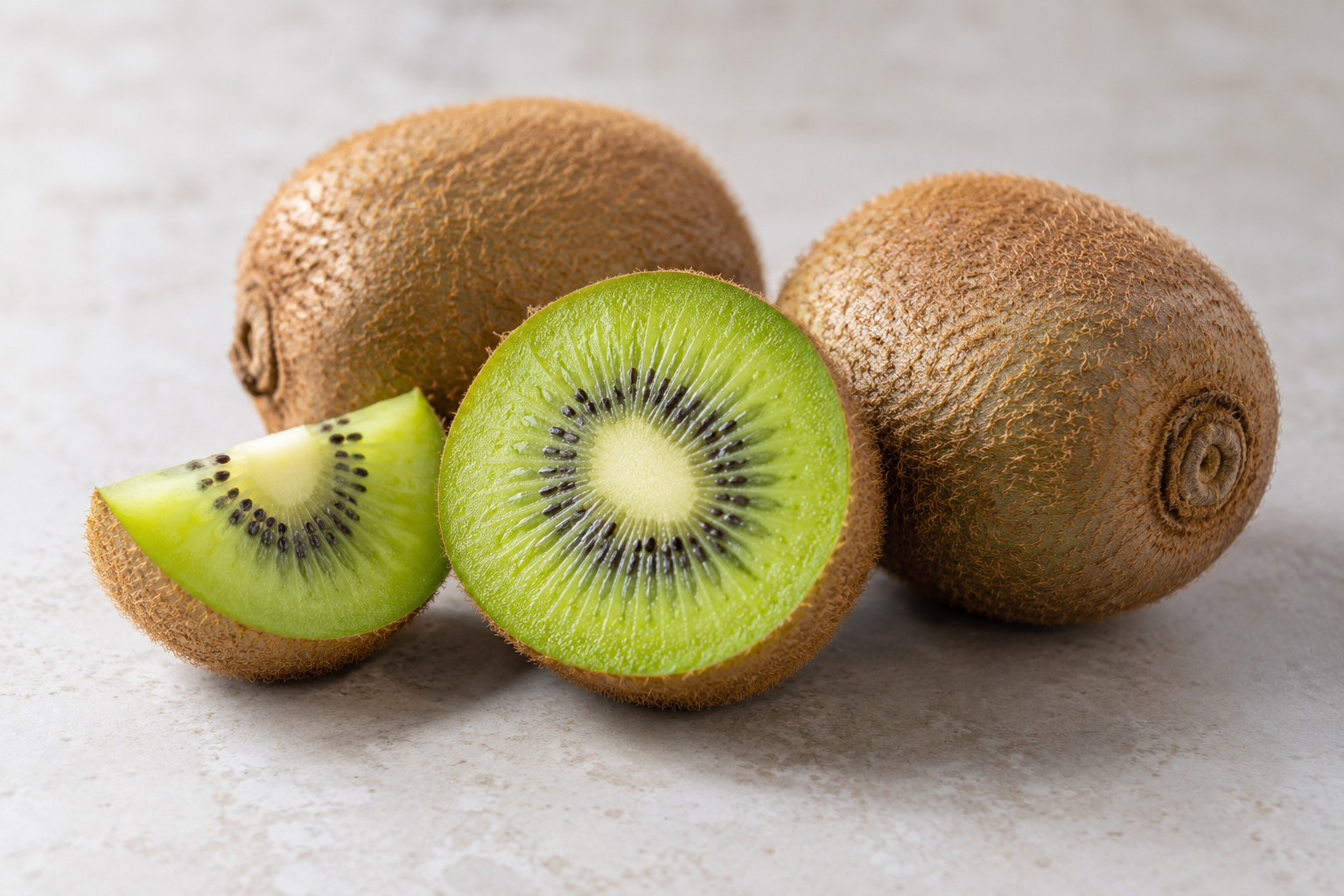
Kiwi fruit: a sensory reference for defining the target flavor profile.
How should a kiwi flavor profile be specified without vague fruit adjectives?
A usable kiwi flavor profile names fruit direction, time course, tartness, and forbidden notes. “Tropical” and “fresh green fruit” do not tell a flavorist whether the sample should smell like crushed Hayward pulp, a sweeter gold slice, or a candy ester with almost no grass.
Treat Actinidia deliciosa ‘Hayward’ as the default green reference. Hayward Kiwi opens on leafy C6 aldehydes and lands on tart juice. Gold Kiwi, from Actinidia chinensis types, opens on tropical esters with less grass. Hardy Kiwi from Actinidia arguta reads closer to small berry or grape. Candy kiwi is a construction: fast ester, low green, sweet melon-apple body.
Write the brief as a sequence at 0–2 s, 2–10 s, and 10–60 s. Score green, ester fruit, and sourness on a 0–10 scale. Add exclusions such as “no cucumber” and “no solvent-like ester.”
Kiwi puree, juice concentrate, and fruit powder add water, sugar, acids, pectin, color, and sometimes actinidin, a fruit protease that can attack dairy proteins. A compounded flavor controls aroma and taste at a much lower solids load and is not a source of actinidin or seed crunch. The flavor concentrate category for food manufacturing covers that family. This page decides one kiwi direction in one application.
| Profile dimension | Options to lock in the brief | Check in the finished product |
|---|---|---|
| Fruit direction | Hayward green-tart, Gold Kiwi, Hardy Kiwi, or candy kiwi | First sniff; rule out generic melon candy |
| Opening, 0–2 s | Leafy aldehyde, crushed pulp, tropical ester, or low-green candy | Recognition at 5 °C before swallowing |
| Body, 2–10 s | Tart juice, sweet gold pulp, berry-grape, or confectionery fruit | Body in the real sweetener and acid system |
| Acid | Bright citric, citric-malic, quinic bite, or low-acid candy | Sourness at finished pH, not in water |
| Finish, 10–60 s | Clean tart, lingering green, jammy cooked fruit, or short candy tail | No cucumber, perfume, or metallic tail |
| Visual job | Clear, cloudy, no color, or a separate green colorant | Do not judge aroma by hue |
A one-sentence target is enough to start. Example: “Hayward green-tart kiwi, leafy lift in 2 seconds, tart juice mid-palate, no cucumber, clean sour finish at 5 °C in a 10 °Brix still drink.” Name whether kiwi leads or supports strawberry, apple, lime, aloe, or caffeine.
Which top, middle, and base-note directions change a kiwi flavor brief?
Kiwi identity moves when the brief raises or lowers one note family. Green aldehydes create recognition. Esters create juiciness. Acid creates kiwi rather than melon.
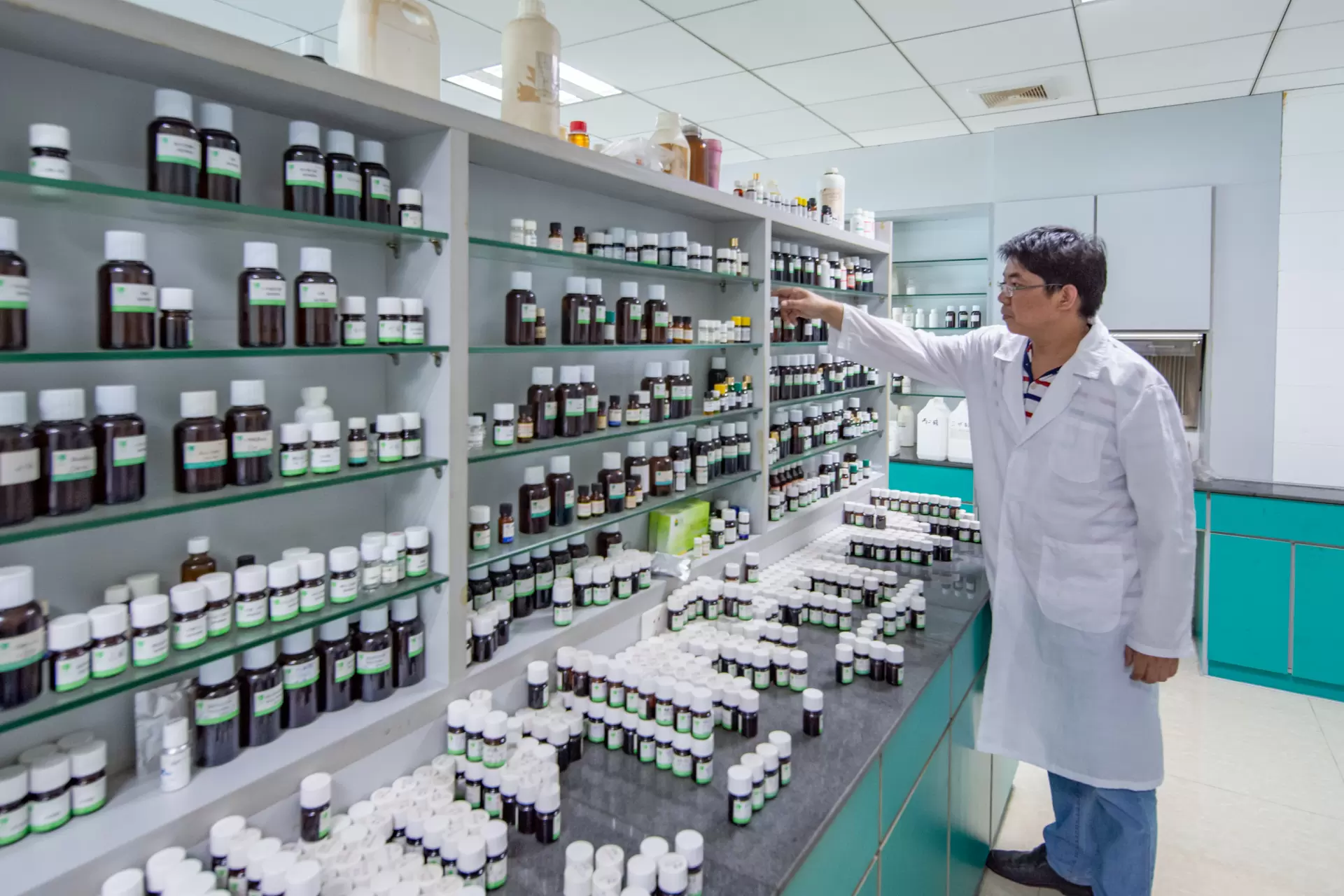
Flavor sample library in the LULIN laboratory
Top notes occupy the first 2 seconds. (E)-2-hexenal, hexanal, and (Z)-3-hexenol supply crushed-leaf lift. They are the Hayward signature, and the first materials to read as cut-grass or cucumber when dose or heat is wrong. Middle notes carry fruit from 2–10 seconds: ethyl butanoate, methyl butanoate, ethyl hexanoate, and methyl benzoate. Too little ester makes a green sniff with no pulp. Too much ester, with weak acid, becomes candy apple. Base notes define the finish. Citric, quinic, and malic impressions belong here.
| Sensory tier | Direction to specify | Useful chemical vocabulary | Best-fit product cue | Failure signal |
|---|---|---|---|---|
| Top | Leafy Hayward crush | (E)-2-hexenal, hexanal, (Z)-3-hexenol | Clear still drink, green-kiwi gummy | Cut-grass, cucumber |
| Top | Low-green gold opening | Reduced C6 aldehydes; brighter esters | Nectar, yogurt, gold-kiwi blend | Generic tropical candy |
| Top-to-middle | Juicy ester fruit | Ethyl butanoate, methyl butanoate, ethyl hexanoate | Juice drink, energy drink, aloe blend | Solvent ester, candy apple |
| Middle | Floral-fruity lift | Methyl benzoate and related esters | Dairy dessert, still nectar | Perfume or powdery soap |
| Middle | Tart juice body | Citric, quinic, and malic acid balance | Any authentic kiwi brief | Melon candy if acid is missing |
| Base | Clean sour finish | Short green persistence | Cold beverage, flavored water | Metallic, lingering grass |
| Base | Cooked jammy kiwi | Reduced fruit, caramelized pulp | Bakery filling, jam confection | Prune, brown apple |
Four first-round briefs cover most work: Hayward green-tart, gold tropical-sweet, candy kiwi, and cooked jammy kiwi. Strawberry-kiwi is a blend brief, not a cultivar. State the ratio: “kiwi green-tart leads; strawberry supports the middle” or “strawberry leads; kiwi supplies a 2-second leafy edge.”
How do water, fat, protein, sugar, salt, acid, and serving temperature change kiwi flavoring?
The finished matrix controls how fast kiwi aroma reaches the nose. A water cup cannot predict a 3% protein shake, a 10% fat filling, or a 5 °C energy drink. Rank samples in the production base. Hold flavor dose constant and change one variable.
| Matrix variable | Expected kiwi shift | Controlled contrast set | Approval check |
|---|---|---|---|
| Water | Fast C6 release; thin middle if dose is low | Full liquid ladder: 0.05%, 0.10%, 0.15%, 0.20%, 0.25% w/w | Solubility, haze, ring, fill loss |
| Fat | Muted green opening; longer hydrophobic finish | 0% fat, 3% fat, 10% fat | Phase compatibility and after-swallow aroma |
| Protein | Aldehyde binding; cooked mute after heat | 0% protein, 3% protein, 6% protein | Pre-process and post-process aroma |
| Sugar | Sweeter, jammer fruit; weaker green identity | 8% sucrose, 10% sucrose, 12% sucrose | Acid balance and candy drift |
| Salt / electrolytes | Sharper grass, sour, or metallic tail | 0%, 0.10%, 0.20% sodium chloride | Mineral masking in energy-drink bases |
| Acid | Restores kiwi versus melon | 0.20%, 0.40%, 0.60% titratable acidity as citric acid | Acid type, target pH, flavor after heat |
| Carbonation | Fast burst, then a drier, thinner middle | 0 g/L, 2.5 g/L, 5.0 g/L CO₂ | Opening at 5 °C after fobbing |
| Serving temperature | Cold hides aroma; warmth exposes grass | 5 °C, 10 °C, 20 °C | Blind score at intended service |
Hayward fruit-reference pulp commonly sits near pH 3.1–3.6, 12–16 °Brix, and 1.0–1.6% titratable acidity as citric acid. Gold fruit-reference pulp is often milder: pH 3.4–3.8 and 14–18 °Brix. A drink at pH 3.2 and 10 °Brix will not present the same 0.20% w/w dose like a pH 4.2 dairy base.
Raise solids and the same kiwi item reads riper, then candy-like, then melon-like. Rebuild tartness before raising dose. Citric acid supplies the bright attack; malic acid lengthens sourness. Energy-drink minerals can make hexanal metallic, so test the actual potassium, magnesium, and sodium system. Whey, casein, soy, and pea proteins bind aldehydes. A leafy Hayward sample that wins a water triangle can vanish after 135 °C for 2 s in a 3% protein drink. Fat hides the 0–2 s green flash. At 5 °C the leafy top collapses. Read every code at 5 °C and 20 °C.
Which kiwi flavor format should be tested first: liquid, emulsion, powder, or fruit ingredient?
Choose kiwi format by continuous phase, clarity, process heat, and handling. The seven options below are not interchangeable.
| Named option | Phase or structure | Controlled first screen | Suitable applications | Primary failure mode |
|---|---|---|---|---|
| water-soluble liquid | Clear aqueous carrier | 0.05%, 0.10%, 0.15%, 0.20%, 0.25% w/w | Clear drinks, syrups, jelly, yogurt | Green-top heat loss, haze |
| oil-soluble liquid | Lipid-phase carrier | 0.25%, 1.00%, 5.00% w/w | Fat fillings, coatings, oil systems | Uneven dispersion in water |
| oil-in-water beverage emulsion | Flavor oil in water; may add cloud | 0.75 g/L, 1.00 g/L, 1.25 g/L | Cloudy drinks, nectar, RTD products | Ring, creaming, droplet growth |
| spray-dried powder | Dry carrier matrix | 0.10%, 0.20%, 0.30% w/w | Dry drinks, aloe powders | Moisture pickup, muted opening |
| encapsulated powder | Protected dry matrix | 0.10%, 0.20%, 0.30% w/w | Heat-exposed dry blends | Slow or incomplete release |
| flavor concentrate | Supplier-defined concentrated system | Apply the selected item's assay and phase | Foods matched to its carrier | Treating the name as universal strength |
| kiwi puree or juice concentrate | Fruit solids, acid, color, pectin | 12–16 °Brix; pH 3.1–3.6 | Smoothies, sauces, fruit bases | Solids, haze, actinidin |
The clear-beverage design benchmark is 0.20% w/w, equal to 2.0 g/kg. It is a rounded high-end starting point inside the 0.05% to 0.25% liquid ladder, not a legal limit and not a LULIN SKU guarantee. For a ready-to-use emulsion, 1.25 g/L is the high-end reference benchmark. For a first powder reconstitution, 0.20% w/w is the reference benchmark inside 0.10%, 0.20%, and 0.30% w/w.
A water-soluble liquid is usually the first clear-drink candidate. An oil-in-water beverage emulsion is the better first pick when cloud matters. Inspect the pack after carbonation, pasteurization, cooling, and 30 days. An oil-soluble liquid belongs in fat fillings; it will not disperse cleanly in water. Spray-dried powder commonly uses maltodextrin or modified starch; encapsulated powder adds protection. A representative dry screen can set moisture below 6%, bulk density from 550 g/L to 650 g/L, and reconstitution from 35 °C to 45 °C. See the powder versus liquid food flavor guide for handling contrasts. Fruit puree remains a fruit ingredient.
Which processing and storage conditions strip the green kiwi top note?
Heat, oxygen, light, shear, and warm storage strip Hayward green aldehydes first. The ester body remains, so the drink tastes like candy melon or cooked apple. Approve the complete production cycle, not a freshly mixed bench cup.
| Process or condition | Likely kiwi change | Controlled comparison | Record for diagnosis |
|---|---|---|---|
| Pasteurization or HTST | Leafy top loss; sweeter ester remains | 72 °C for 15 s; 85 °C for 15 s | Addition point, peak, hold |
| Hot fill | Stronger grass loss; cooked pulp note | 85 °C for 30 s; 95 °C for 30 s | Fill temperature, cooling rate |
| UHT | Aldehyde strip plus protein mute | 135 °C for 2 s; 140 °C for 4 s | Direct or indirect system |
| Baking | Filling retains more aroma than crumb | 160 °C for 20 min; 180 °C for 15 min | Dough, filling, cooled product |
| Hard-candy cooking | Green top leaves before the glass sets | Kettle addition versus cooling-stage addition | Peak and addition temperature |
| Homogenization | Extra passes add heat | 10 MPa, 20 MPa, 30 MPa at 45 °C inlet | Pressure, pass count |
| Freeze–thaw | Separation, muted aroma | −18 °C for 24 h; 20 °C for 4 h | Freeze rate, thaw method |
| Oxygen, light, warm storage | Grass-to-cardboard shift | 4 °C, 20 °C, 35 °C at 0 days, 7 days, 30 days | Headspace, light, package |
Green notes leave first. If the factory pasteurizes at 85 °C for 30 s, a 20 °C smelling-strip win is not an approval. Store liquids at 10 °C to 20 °C. Keep frozen puree at or below −18 °C. Use 0.20% w/w and 1.25 g/L in the first comparison, then move the dose only after the matrix, process, and serving condition are fixed. Checkpoints remain 0 days, 7 days, and 30 days at 5 °C and 20 °C.
How should kiwi flavoring be screened in drinks, dairy, dry mixes, and confectionery?
Application family changes the first format, the dose ladder, and the defect that kills the project.
| Application | First format to test | Reference starting point | Kiwi-specific kill criterion |
|---|---|---|---|
| Clear still drink | water-soluble liquid | 0.20% w/w at pH 3.2, 10 °Brix, 5 °C | Haze, cucumber top, empty middle |
| Strawberry-kiwi juice drink | water-soluble liquid or emulsion | 0.15% and 0.20% w/w kiwi beside locked strawberry | Strawberry wipe-out or kiwi as a 1-second sniff |
| Energy drink | water-soluble liquid | 0.20% w/w in the actual acid, sweetener, and mineral system | Metallic grass, sucralose linger |
| Dairy or plant yogurt | water-soluble liquid | 0.15%, 0.20%, 0.25% w/w after heat | Protein mute, cooked fruit |
| Dry mix or aloe powder | spray-dried powder | 0.20% w/w reconstituted at 20 °C | Caking, carrier taste, missing green |
| Gummy or hard candy | water-soluble or encapsulated powder | 0.20% and 0.25% w/w; 0.30% w/w only if the item range allows | Cooked apple, lost Hayward identity |
| Thickened beverage | water-soluble liquid | 0.20% w/w in the actual gum system | Aroma trapped; melon-candy after hold |
If the brief wants a commercial strawberry-kiwi blend, lock strawberry first, then add kiwi at 0.10%, 0.15%, and 0.20% w/w. Energy-drink kiwi fails in minerals and high-intensity sweeteners more often than in heat. Aloe gels add cucumber-like notes that stack on hexanal. Xanthan, guar, and starch hold aroma in thickened beverages, so a 0.20% w/w dose that is loud in thin juice can disappear at nectar consistency. Dairy needs the processed cup. Actinidin from puree can still attack proteins even when the flavor item is stable.
How should buyers compare kiwi flavor samples in the real application base?
Teams should run coded kiwi samples in the finished base, repeat them after the complete process, and check the sensory arc and physical state at 0 days, 7 days, and 30 days. Judge retention.
A six-step kiwi sample protocol
- Lock the base. Record water, fat, protein, sugar, salt, acid, pH, °Brix, gums, caffeine, and strawberry or aloe companions.
- Set the ladder. Test 0.05%, 0.10%, 0.15%, 0.20%, and 0.25% w/w in one base. Add 0.30% w/w for candy or bakery only when the item range permits it. Keep 0.20% w/w as the reference benchmark.
- Apply the process. Pasteurize, carbonate, bake, freeze, homogenize, or thicken as production will. Record temperature plus hold time.
- Blind and randomize. Code every sample. Standardize cup, fill volume, 10 min equilibration, and service temperature.
- Score the arc. Use a 0–10 scale for green burst, ester body, tart balance, melon/cucumber off-note, candy drift, finish, and kiwi fit.
- Check physical behavior. Record clarity, haze, ring, creaming, sediment, color, and viscosity at 0 days, 7 days, and 30 days.
Use ASTM E1871-17 for consistent sample serving and ASTM E2454-20 when defining a sensory shelf-life endpoint. They do not set a kiwi dose.
Choose the lowest dose that reaches the target arc. Keep sample code, batch, use level, tasting date, and requested adjustment together. Food flavor formulation support for B2B R&D is the technical handoff route. Advance a sample only at 75/100 or higher on a scorecard of green identity 20, tart-fruit body 20, process retention 20, off-note control 15, physical stability 15, and handling 10, with no ring, sediment, cucumber, or solvent failure.
What belongs in a kiwi flavoring RFQ for United States and export projects?
An effective kiwi RFQ combines application, sensory direction, matrix, process, format, documents, and commercial target in one brief.
| RFQ section | Details to include | Why it changes the recommendation |
|---|---|---|
| Finished product | Still drink, strawberry-kiwi blend, energy drink, yogurt, dry mix, gummy, sauce, or thickened beverage; batch size | Defines phase, dose method, and scale |
| Sensory target | Hayward, Gold Kiwi, Hardy Kiwi, or candy; top/middle/base; cucumber/melon/solvent limits | Separates leafy juice from candy ester |
| Matrix | pH, °Brix, titratable acidity, fat, protein, salt, sweetener, caffeine, aloe, strawberry | Predicts green-note release and binding |
| Format | Water-soluble liquid, oil-soluble liquid, oil-in-water beverage emulsion, spray-dried powder, encapsulated powder, or fruit ingredient | Prevents an incompatible phase |
| Process | Addition point, pasteurization/HTST/UHT, bake, carbonation, homogenization, freeze–thaw | Determines heat stability and process loss |
| Trial plan | 0.05%, 0.10%, 0.15%, 0.20%, 0.25% w/w ladder; 5 °C and 20 °C; 0 days, 7 days, 30 days | Makes supplier feedback comparable |
| Quality documents | COA, TDS, SDS/MSDS, ingredient statement, allergen, GMO, vegan, Halal/Kosher, natural/artificial wording | Supports QA, label, and importer review |
| Commercial terms | MOQ, pack size, shelf life, storage, lead time, Incoterm, destination | Converts a sample into a purchase |
State the destination market first. A United States buyer may need a natural-flavor declaration under 21 CFR 101.22. An EU customer may request wording aligned with Regulation (EC) No 1334/2008. For United States projects, 21 CFR 101.22 defines natural flavor by source and function. Ask for carrier, ingredient statement, and intended wording. The B2B guide to artificial flavor explains that general boundary; this kiwi page only applies it to the RFQ. Request the item file set through the food flavor compliance document request guide.
How LULIN FLAVOR supports a kiwi flavoring project
LULIN FLAVOR is the English brand of QUANZHOU LVLIN BIOENGINEERING CO., LTD., a food-grade flavor company in Quanzhou, Fujian, China, established in 2001. The company develops, produces, and sells food-grade flavors. Public company materials describe more than a dozen flavor engineers, more than 20 years of development and application work, three production lines, more than 50 employees, a six-acre site, and more than 8,000 m² of building area.
Specify Hayward or gold direction, appearance, pH, °Brix, heat step, format, the 0.20% w/w benchmark, and destination-market files. LULIN FLAVOR can review that brief and return liquid, powder, or emulsion samples for the next formulation step. The LULIN FLAVOR food flavor manufacturer home page is the company entry point.
Buyer FAQ: Kiwi Flavoring Decisions
What does kiwi flavoring taste like?
Kiwi flavoring tastes leafy-green, tart, and juicy when the brief is Hayward, or sweeter and more tropical when the brief is Gold Kiwi. Candy kiwi drops the grass and keeps a sweet-tart ester. Sugar, acid, fat, protein, serving temperature, and heat change that balance.
Which kiwi flavoring is best for a clear beverage?
A water-soluble liquid is usually the first kiwi format to test in a clear beverage. Start at the 0.20% w/w (2.0 g/kg) design benchmark, then compare 0.10%, 0.15%, and 0.25% w/w after carbonation or pasteurization at 5 °C.
When should a beverage developer choose a kiwi emulsion?
Choose an oil-in-water beverage emulsion when the drink needs cloud, fuller mouthfeel, or oil-phase delivery. Screen at the 1.25 g/L reference benchmark and inspect the drink after homogenization, heat treatment, cooling, and 30 days.
Can an oil-soluble kiwi flavor go into water?
An oil-soluble kiwi flavor is intended for a lipid phase and will not disperse uniformly in a water-only formula. Use a water-soluble liquid or an oil-in-water beverage emulsion for an aqueous drink.
Is kiwi flavoring the same as kiwi puree?
Kiwi flavoring supplies a concentrated aroma direction. Puree adds solids, pectin, color, organic acids, and sometimes actinidin. A formula may use both, but puree is not a one-for-one replacement for a flavor concentrate.
What dosage should a buyer use for a first kiwi trial?
Use the selected item's range and test 0.05%, 0.10%, 0.15%, 0.20%, and 0.25% w/w in one beverage base; 0.20% w/w is the reference benchmark. Candy, bakery, dairy, and powder systems need matrix-specific ladders.
Why does kiwi flavoring turn grassy or like melon candy after heat?
Heat strips (E)-2-hexenal and hexanal first, leaving sweeter esters. The remaining profile reads as melon candy, cooked apple, or generic tropical fruit. Compare the same sample before and after the complete process, then again at 7 days and 30 days.
How should kiwi flavor samples be compared?
Compare coded samples in the final application at 5 °C and 20 °C and score green burst, fruit body, tartness, melon/cucumber notes, finish, and physical stability. Repeat the check at 7 days and 30 days.
Which documents belong in a kiwi flavor RFQ?
Request the item-specific COA, TDS, SDS/MSDS, ingredient statement, allergen and GMO statements, vegan or Halal/Kosher documents when required, and natural/artificial or market-label information. Include the destination country and customer checklist.
What should a United States buyer ask about natural kiwi flavor labeling?
A United States buyer should ask how the selected item is classified and labeled under 21 CFR 101.22, including source materials and carrier. Review the supplier's ingredient statement and market documents against the finished formula.
Write the next kiwi sample brief
Build the next kiwi sample brief with product, Hayward or gold direction, top/middle/base notes, cucumber and melon limits, pH, °Brix, process, format, 0.20% w/w benchmark, 5 °C and 20 °C service, 0/7/30-day checks, destination market, and documents.
Send it through the Food Flavor Sample Request for B2B Buyers or Contact LULIN FLAVOR. Include the current benchmark sample when available.
Develop this flavor in your product
Send your product, target market and project goal. We will review the sample direction with you.